Commercial Metal Roofs · Louisville, KY

Louisville Metal Roof Coating

We coat commercial metal roofs in Louisville and nearby towns. Rusted screws, open laps, and rust spots get repaired first, then a flexible coating covers the whole roof.

  • Roof Walk Comes First
  • Rust Treated Before Coating
  • Every Lap Sealed
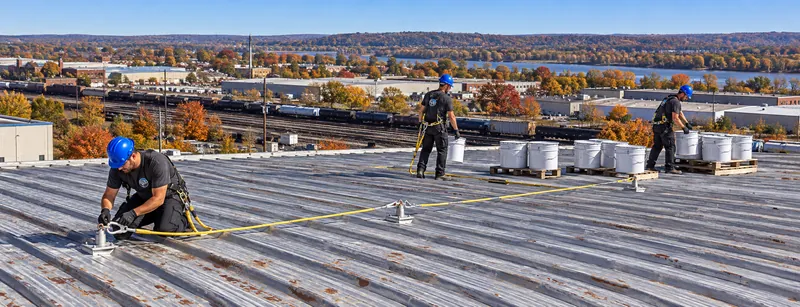
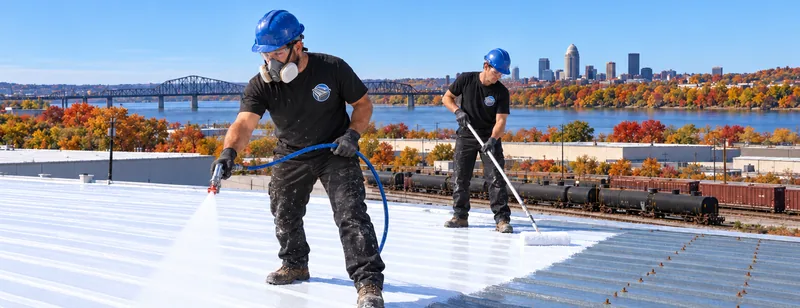
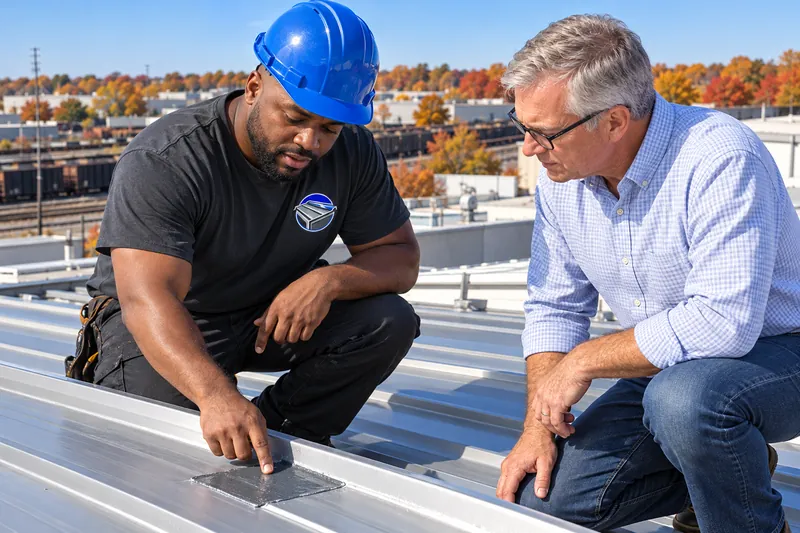
Crew spraying and back-rolling white coating across ribbed metal roof panelsRoofer pointing out a lifted panel lap to a building owner during a metal roof walk
  • Commercial Roofs Only
  • Photos Of Every Problem Area
  • Leaks Repaired Before Coating
  • Coats Timed To Dry Weather

Why Louisville Metal Roofs Leak

Metal roofs leak at the joints long before the panels wear through. These six conditions show up most often on commercial buildings around Louisville.

Heat Cycling

Screws Backing Out

You See
Screw heads standing proud of the panel, washers cracked or missing.
What It Means
Panels grow in afternoon sun and shrink overnight, loosening fasteners a little each day. Water follows the threads, so each loose screw is tightened or upsized before coating.
Rain

End Laps Holding Water

You See
Dirt lines and orange staining where one panel overlaps the next downslope.
What It Means
End laps trap water and grit, so they rust from the inside out. They get opened, cleaned, stitched, sealed, and covered with fabric before the field coat.
Age

Red Rust On Panel Faces

You See
Orange bloom on ribs and around screw heads, with flaking scale on older sections.
What It Means
Surface rust is brushed and primed. Scale and pinholes are ground to firm steel, and rusted-through panels get patched or replaced first.
Trapped Moisture

White Rust At Laps

You See
Chalky white powder on galvanized panels where rain and meltwater sit.
What It Means
That powder is zinc corrosion on the galvanized layer. It is washed off and primed per the coating maker before anything goes on top.
Hail

Dents And Cracked Sealer

You See
Dented ridge caps and ribs, split sealer at laps, cracked skylight panels.
What It Means
Dents alone stay cosmetic. Cracked sealer or coating lets water in, so those spots are cleaned and recoated, and dated photos go to the insurer.
Low Slope

Water Standing On Flat Panels

You See
Puddles that sit for days on low-pitch additions, canopies, and box gutters.
What It Means
Silicone handles standing water better than acrylic. Water that sits for days also earns a look at the purlins underneath for sagging.

Coat, Restore, Re-Panel, Or Replace?

Each row is a condition we find on Louisville metal roofs. The dots show which job it usually points to, and one building often lands in two rows.

  • Usually fits
  • Sometimes
  • Rarely
Roof ConditionCoatRestoreRe-PanelReplace
Light rust, leaking screwsFasteners get upsized and capped, then the field coat goes on.CoatRestoreRe-PanelReplace
Chalky factory paint, tight lapsWash, adhesion test, and primer if the test patch peels.CoatRestoreRe-PanelReplace
Surface rust plus open lapsLaps get reinforced with fabric and sealer before the coats.CoatRestoreRe-PanelReplace
Rust holes in some panelsHoled panels come out; the rest of the roof is restored.CoatRestoreRe-PanelReplace
Wet insulation, sagging purlinsStructure and insulation come first, and coating waits.CoatRestoreRe-PanelReplace

Restoration means coating plus heavier repairs, such as reinforced laps and patched panels. The roof walk sorts each section of your building.

Five Coating Systems, Each In Its Own Order

Every system starts with a washed, repaired roof. The primer, the detail work, and the coats on top change from one system to the next.

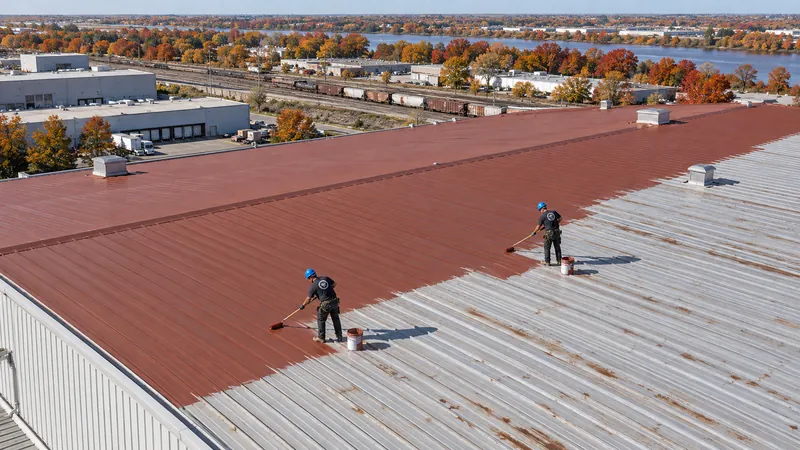
Long warehouse metal roof with red primer on one half and bare galvanized panels on the other

Metal Roof Coating

Exposed-fastener R-panel, standing seam, and older corrugated roofs with surface rust and leaking screws. The panels keep carrying the load while the coating takes over the joints.

Order Of Work

  1. Wash Panels
  2. Prime Rust
  3. Seal Laps
  4. Topcoat
Metal roof coating details
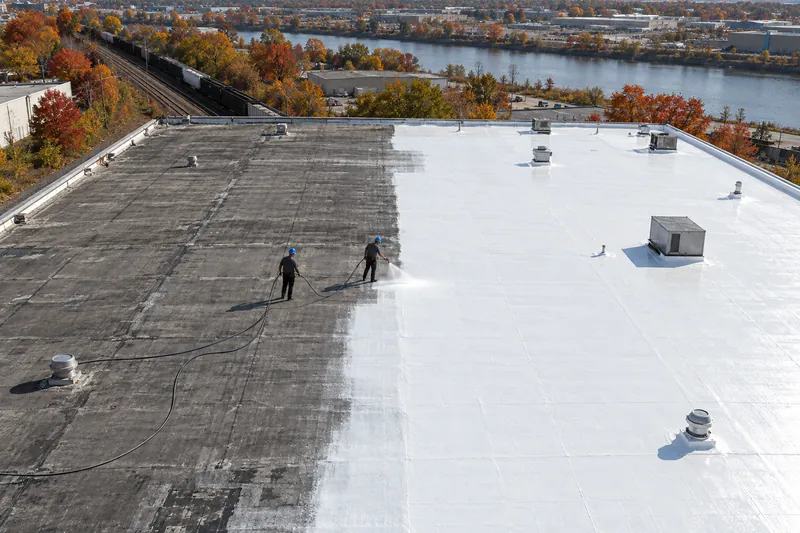
Low-slope roof with white silicone coating applied over half the field

Silicone Roof Coating

Low-slope metal, flat additions, and box gutters where rainwater sits after storms. Silicone stays intact under standing water, and later recoats call for silicone again.

Order Of Work

  1. Clean
  2. Prime
  3. Detail Drains
  4. Silicone Coat
Silicone roof coating details
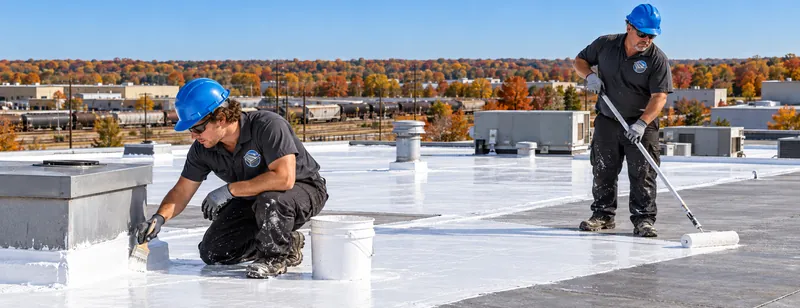
Roofer brushing acrylic coating at a rooftop curb while a second roller coats the field

Acrylic Roof Coating

Sloped panels that shed water fast and suit a bright white, water-based finish. Acrylic cures in warm, dry weather and takes a recoat easily years later.

Order Of Work

  1. Wash
  2. Prime
  3. Fabric At Details
  4. Two Coats
Acrylic roof coating details
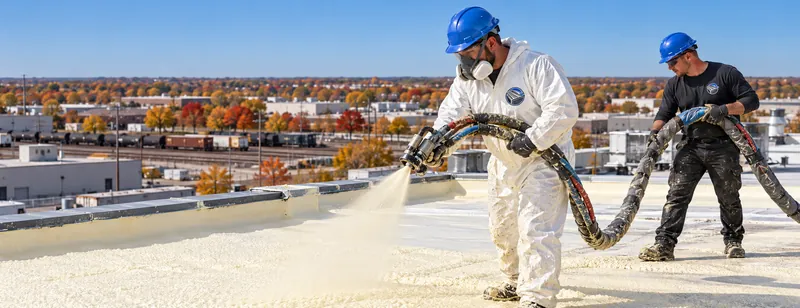
Crew spraying polyurethane foam across a commercial roof deck

Spray Foam Roofing

Buildings that need insulation added, or roofs with deep ribs and leaking laps everywhere. Foam fills the ribs to a smooth surface, then a coating protects it from sun.

Order Of Work

  1. Prep Deck
  2. Spray Foam
  3. Base Coat
  4. Top Coat
Spray foam roofing details
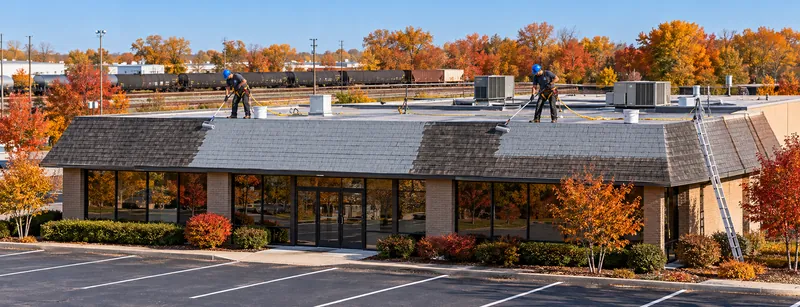
Crew coating the shingle roof section of a one-story office building

Shingle Roof Coating

Shingle mansards and steep sections beside metal or low-slope roofs on strip centers, offices, and churches, when the shingles lie flat and the maker allows a coating.

Order Of Work

  1. Check Shingles
  2. Clean
  3. Seal Tabs
  4. Coat
Shingle roof coating details
Roofer snapping a chalk line on metal panels next to staged coating pails

Screws Backing Out Or Laps Leaking?

Note where water shows up inside and which roof section sits above it. That detail points the roof walk straight at the failing laps and fasteners.

How A Metal Roof Gets Coated

Five steps, in this order, on every metal roof we coat. Photos are taken at each stage so you see the panels before coating covers them.

  1. INSPECT

    Step 1: Inspect Your Roof

    A full walk of the panels, laps, ridge caps, skylights, and gutters, plus a look at the underside from inside for rusty purlins and wet insulation. Painted panels get an adhesion test patch.

  2. WASH

    Step 2: Wash And Treat Rust

    Pressure washing strips dirt, chalk, and oil. Loose rust comes off with wire brushes or grinders, and bare or rusted steel gets a rust-inhibiting primer.

  3. DETAIL

    Step 3: Fix Fasteners And Seal Laps

    Spinning screws are tightened, stripped ones upsized, and cracked washers swapped. Laps, end laps, curbs, and flashing get seam sealer and polyester fabric embedded in base coat.

  4. COAT

    Step 4: Apply Base And Top Coats

    Skylights, vents, and rooftop units are masked. Base coat and topcoat go on at the thickness the product data sheet sets for metal, one roof section at a time.

  5. CHECK

    Step 5: Walk It Again

    Coating thickness is checked across the field, thin spots and pinholes are touched up, and you receive the photo record along with the products used.

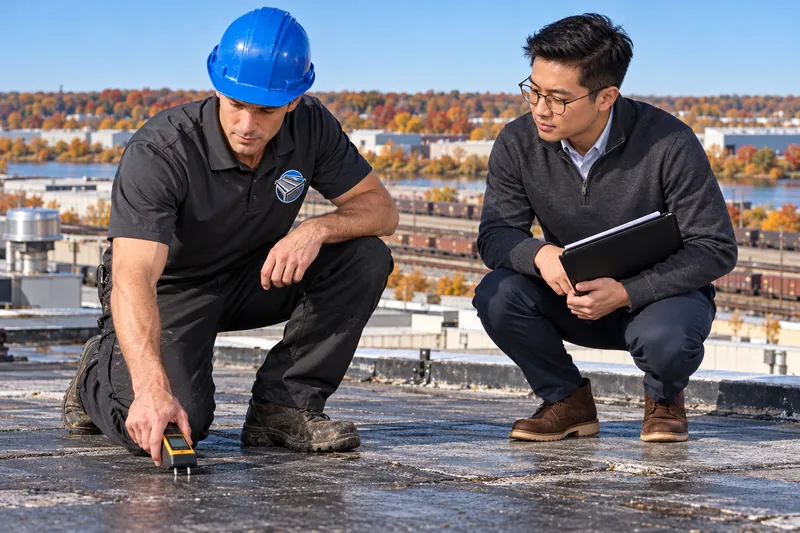
Roofer taking moisture meter readings on a low-slope roof beside the owner
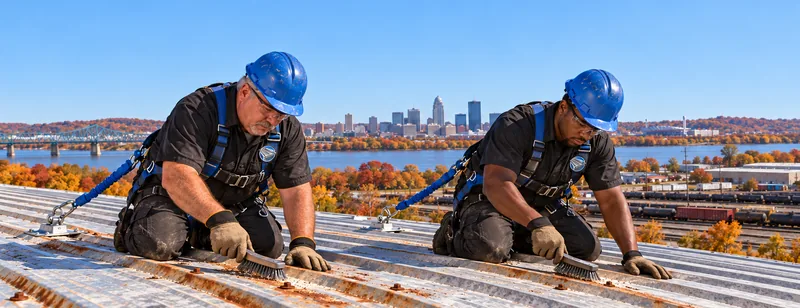
Roofers in fall-protection harnesses wire brushing rust off metal roof panels

What A Louisville Metal Roof Coating Changes

Coating seals the joints where metal roofs leak and puts a new surface over the steel. These are the four results owners notice first.

Leaks Stop At The Joints

Fabric and sealer bridge each panel lap, and every screw head gets capped. Those joints are where most metal roofs start leaking, so sealing them is the main reason to coat.

Less Spent Than New Panels

Solid panels stay in place and keep carrying the load. Prep and coats cost well under tearing off steel and setting a new roof, though rust and fastener counts move the price.

Business Keeps Running Below

Crews work on top of the panels, one section at a time. Inside, people mostly hear footsteps and notice some odor near open rooftop intakes, which get shut down or covered.

Old Steel Stays Out Of The Landfill

Coating over the existing panels avoids hauling away tons of tear-off metal and insulation. When the topcoat wears years later, the roof is cleaned and recoated on the same system.

Where We Coat Roofs Around Louisville

We coat commercial metal roofs in Louisville and the five towns below. Don't see your town? Just call us or send us a message and we'll tell you if we cover it.

Service area map, not to scale: downtown Louisville on the Ohio River with St. Matthews and Lyndon to the east, Okolona to the south, and Shively and Pleasure Ridge Park to the southwest.EASTSOUTHSOUTHWESTI-64I-71I-65US 31WPreston HwyI-264INDIANAOhio River (state line)KENTUCKYLouisvilleSt. MatthewsLyndonOkolonaShivelyPleasure Ridge ParkNNot to scale

Not to scale. Placed by direction from downtown.

  • St. MatthewsEast · I-64 and I-264

    A city Letter of Compliance comes before the Metro permit, naming every trade on the job.

  • LyndonEast · I-264

    Plans go to the City Clerk 30 days ahead, so the coating date gets set early.

  • OkolonaSouth · Preston Highway and I-65

    Exposed-fastener shops and retail roofs carrying years of sign and antenna mounts.

  • ShivelySouthwest · US 31W and I-264

    Older industrial metal buildings with layered mastic patches and a city Compliance Certificate.

  • Pleasure Ridge ParkSouthwest · US 31W Dixie Highway

    Gutters and box gutters on shops and strip centers, with permits straight from Metro.

Questions Owners Ask Before Coating

Short answers to the first questions we hear. The full list is on our metal roof coating FAQ.

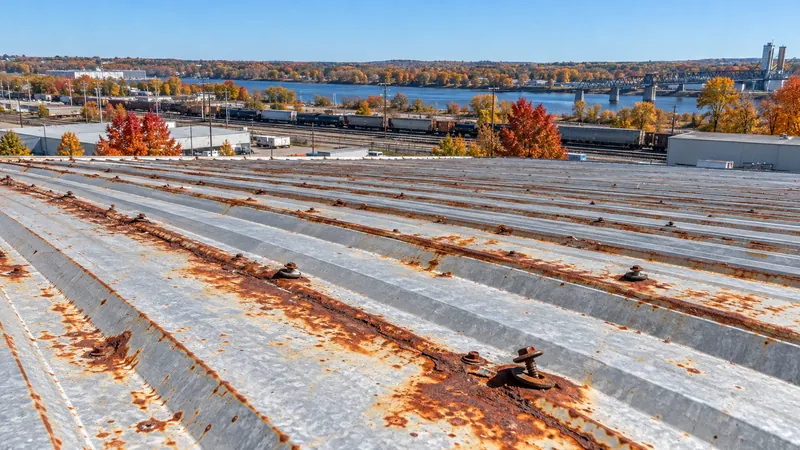
Rust bloom and corroded fastener heads along the ribs of old metal roof panels

Question about your own roof?

Call Us
What does a metal roof coating actually do?

It turns the joints of a metal roof into one continuous, flexible skin. The liquid cures into a rubbery membrane over the steel, bridging panel laps, wrapping screws and washers, and covering ridge caps and trim.

The panels still carry the load while the coating handles waterproofing, and a white finish reflects sun that faded paint absorbs.

Does a white coating help or hurt a metal building in Louisville's climate?

For most occupied buildings it helps. A white coat cuts summer heat coming through the panels, and the U.S. Department of Energy cool roof guide notes that in mixed climates the winter heating penalty is often smaller than the summer savings.

A heated warehouse with little cooling is the case to weigh, along with the insulation under the steel.

What drives the cost of coating a commercial metal roof?

Prep drives it more than square footage. Two roofs of the same size can price far apart once you count red rust to grind and prime, screws to replace, linear feet of laps and ridge cap, skylights and gutters to detail, eave height for the lift, and coating thickness. Pricing follows an on-roof inspection with photos.

What happens when a crew inspects your metal roof?

Expect a full walk of the roof and a look underneath from inside. On top we check fasteners, washers, laps, ridge caps, skylights, gutters, and rust, and run a test patch on painted panels.

Inside we note rusty purlins, wet insulation, and stains. You get photos and a plain answer: coating, spot repairs, foam, or new panels.

Can a metal roof be coated during a Louisville winter?

Prep can, and the field coats wait for better weather. Fastener replacement, lap repair, and rust grinding work in cooler months, while coatings need dry panels and mild nights to cure. Field coats land in the drier stretches of late summer and early fall, and silicone tolerates cooler, damper days better than acrylic.

Get A Price On Coating Your Metal Roof

Tell us about the building and the roof sections that leak. We will set up the roof walk and photograph what we find.

Call (502) 281-7941