Low-Slope And Ponding Roofs

Louisville Silicone Roof Coating

We apply silicone roof coating in Louisville on low-slope metal, flat additions, and box gutters where rainwater sits, after cleaning, priming, and detailing every drain.

  • Built For Standing Water
  • Drains Detailed First
  • Recoats With Silicone
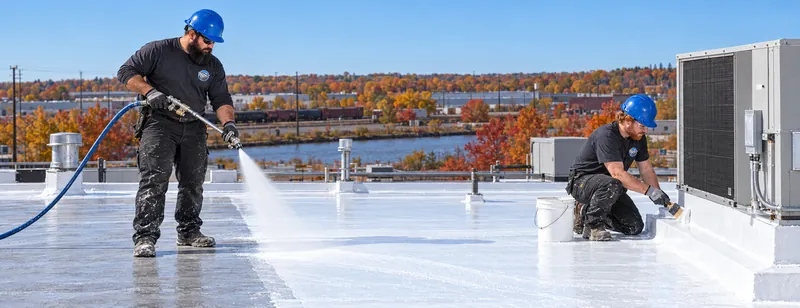
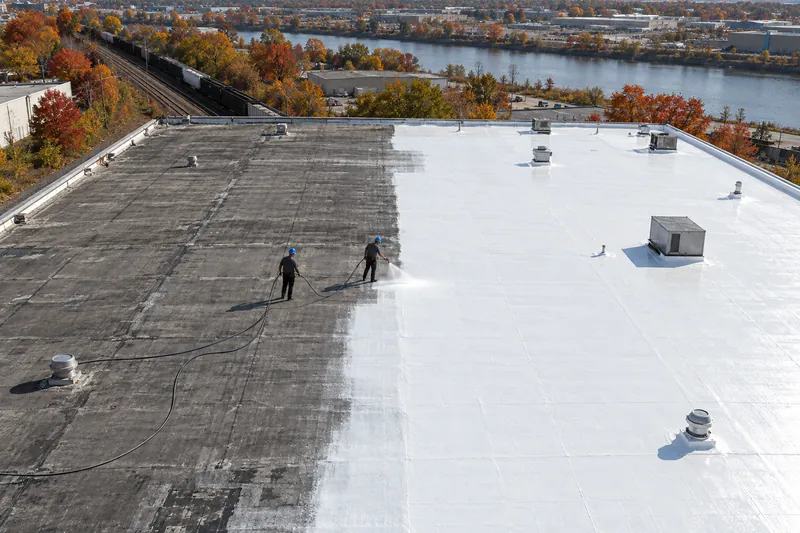
Roofer spraying white silicone coating near a rooftop HVAC unitLow-slope roof with white silicone coating applied over half the field
  • Handles Water That Sits
  • Box Gutters Coated Inside
  • Rooftop Units Masked
  • Gas Lines Marked First

Is This Roof Ready For Silicone?

Silicone earns its place where water sits. These are the low-slope conditions we sort before choosing it.

  • Usually fits
  • Sometimes
  • Rarely
What We FindSilicone FitsFix FirstOther System
Puddles on flat-pitched R-panel after rainSilicone is the usual pick here.Silicone FitsFix FirstOther System
Box gutter seams leaking at outletsSeams resealed and fabric set before coating inside.Silicone FitsFix FirstOther System
One area holding water for daysPurlins checked for sag before any coating.Silicone FitsFix FirstOther System
Steep panels that drain fastAcrylic costs less there and stays whiter.Silicone FitsFix FirstOther System
Old silicone worn thinCleaned and recoated with silicone.Silicone FitsFix FirstOther System

What Standing Water Does To A Low-Slope Roof

Low spots on metal and flat additions collect water after every storm. This is what we find before silicone goes on.

Standing Water

Rings Left By Dried Puddles

You See
Dirt rings and staining where puddles evaporated on flat panels.
What It Means
Those rings mark where water sits longest. They get extra prep and a heavier silicone coat, since that is where coatings get tested hardest.
Rain

Box Gutter Outlets Leaking

You See
Stains on the wall below a built-in gutter and rust at outlet tubes.
What It Means
Box gutter seams and outlets leak first on older buildings. Seams are resealed, outlets rebuilt, and fabric embedded before silicone lines the gutter.
Debris

Drains And Scuppers Clogged

You See
Leaves, grit, and roofing debris packed around drain grates.
What It Means
Blocked drains turn a brief puddle into a standing pond. Clearing and detailing every drain comes before the first silicone pass.
Equipment

Leaks Around Rooftop Unit Curbs

You See
Ceiling stains below HVAC units and condensate lines crossing the roof.
What It Means
Curbs on low-slope roofs sit in water longer than the field. They get sealer and fabric, and unit intakes are shut down or covered during spraying.
Freeze Nights

Split Sealer Along Flat Laps

You See
Hairline cracks in old caulk at laps that stay wet.
What It Means
Water that sits on a lap freezes and thaws through winter. Failed sealer comes out, and new seam sealer and fabric go in before coating.

Commercial Roof Coating Options for Louisville

Silicone goes over more than one roof type. These are the three we coat with it most.

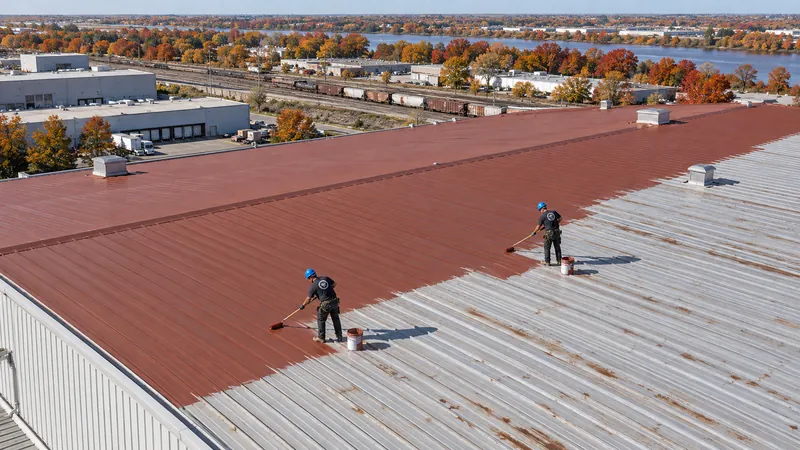
Long warehouse metal roof with red primer on one half and bare galvanized panels on the other

Low-Slope Metal Panels

Flat-pitched R-panel and low standing seam roofs that puddle after rain. Rust is primed and laps sealed before silicone covers the field.

Best on: Additions, canopies, older plants

Roofer taking moisture meter readings on a low-slope roof beside the owner

Flat Built-Up And Single-Ply Roofs

Older flat roofs over offices and shops, once a moisture survey shows dry insulation. Wet areas are cut out and replaced first.

Best on: Offices, strip centers, schools

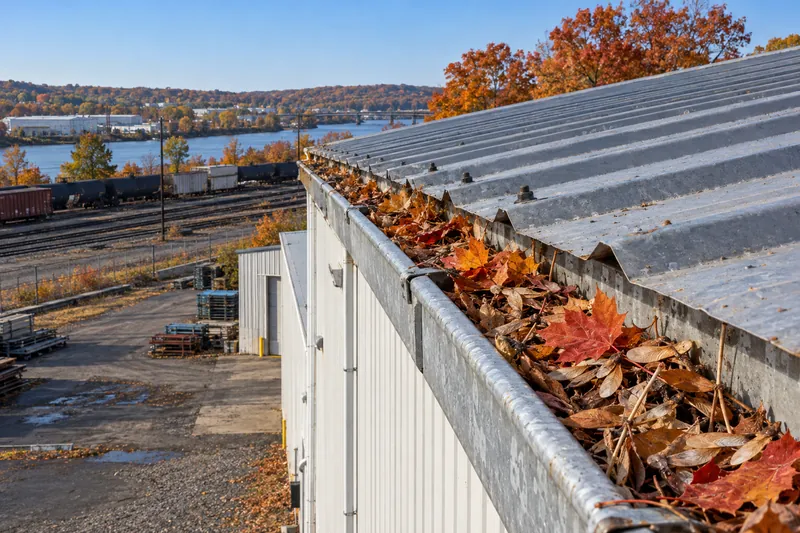
Leaves packed in the gutter along the eave of a metal panel roof

Box Gutters And Valleys

Built-in gutters where water sits after storms. Seams and outlets are resealed and fabric set, then silicone lines the trough.

Best on: Older brick and metal buildings

Benefits of Coating Your Roof

What silicone changes on a roof that holds water after rain.

Holds Up Under Standing Water

Water that sits for days leaves silicone's film intact, where water-based acrylic softens. Low panels and gutter troughs gain the most from it.

Flexible Through Freeze Nights

Cold weather leaves silicone flexible, so it rides through freeze-thaw cycles at laps and curbs where old caulk has been cracking.

Lower Cost Than A Tear-Off

Coating the existing roof costs far less than tearing it off and installing a new one, provided the deck and insulation underneath are dry.

Fewer Leak Points Left

Drains, outlets, curbs, and laps get detailed before the field coat, then one continuous membrane covers the whole low-slope area.

Coating rig trailer and hose reel staged beside a commercial building parking lot

Water Sitting On Your Roof Days After Rain?

Tell us which section holds water and for how long after a storm. That tells us where drains, laps, and purlins need checking first.

How We Apply Silicone Roof Coating

Silicone needs a clean, dry, primed roof to stick, so most of the visit goes into prep.

  1. INSPECT

    Step 1: Inspect Your Roof

    We map where water sits after rain, take moisture readings, and check purlins under any spot that holds water for days. Old coatings get identified, since silicone recoats call for silicone.

  2. CLEAN

    Step 2: Clear Drains And Wash

    Drains, scuppers, and gutters are cleared, then the roof is washed of dirt, chalk, and oil. Silicone needs a fully dry surface, so wet mornings push the start back.

  3. PRIME

    Step 3: Prime Rust And Old Surfaces

    Rusted steel gets a rust-inhibiting primer, and aged single-ply or old coatings get the primer the silicone maker lists. Test patches confirm adhesion before the field.

  4. DETAIL

    Step 4: Seal Laps, Curbs, And Outlets

    Seam sealer and fabric go on laps, curb corners, pipe boots, and box gutter outlets. Gas lines resting on the roof are marked and supported before anyone sprays near them.

  5. COAT

    Step 5: Spray The Silicone

    Rooftop unit intakes are covered, then silicone is sprayed or rolled to the film thickness on the data sheet, heaviest where water sits longest.

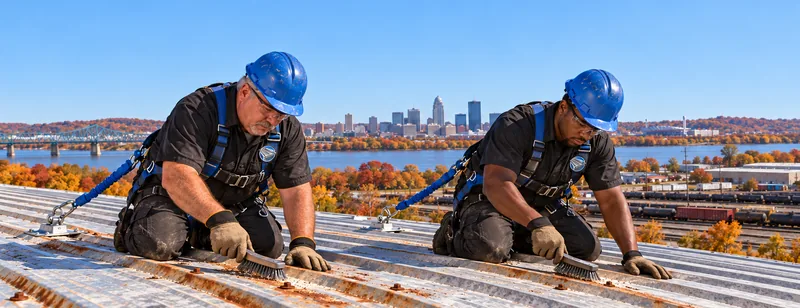
Roofers in fall-protection harnesses wire brushing rust off metal roof panels
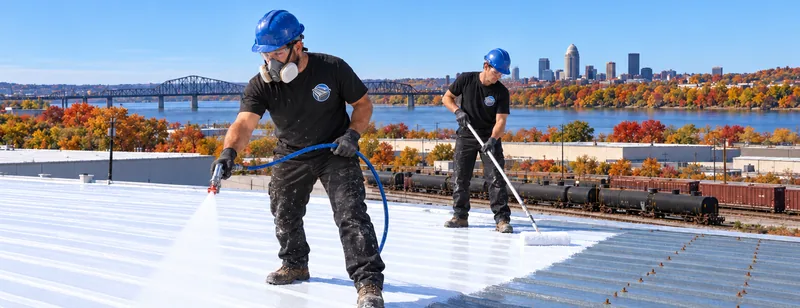
Crew spraying and back-rolling a white coating over a metal roof

Systems That Pair With Silicone

Silicone rarely covers a whole building on its own. These systems handle the sections around it.

Metal Roof Coating

Sloped metal sections on the same building get rust treatment and their own coating plan.

See Metal Roof Coating

Acrylic Roof Coating

Steeper panels that drain fast often get acrylic, which stays whiter and recoats easily.

See Acrylic Roof Coating

Spray Foam Roofing

Spray foam can rebuild slope on a flat roof that ponds, then take a silicone topcoat.

See Spray Foam Roofing

Silicone Coating Questions

What owners ask before choosing silicone for a roof that holds water.

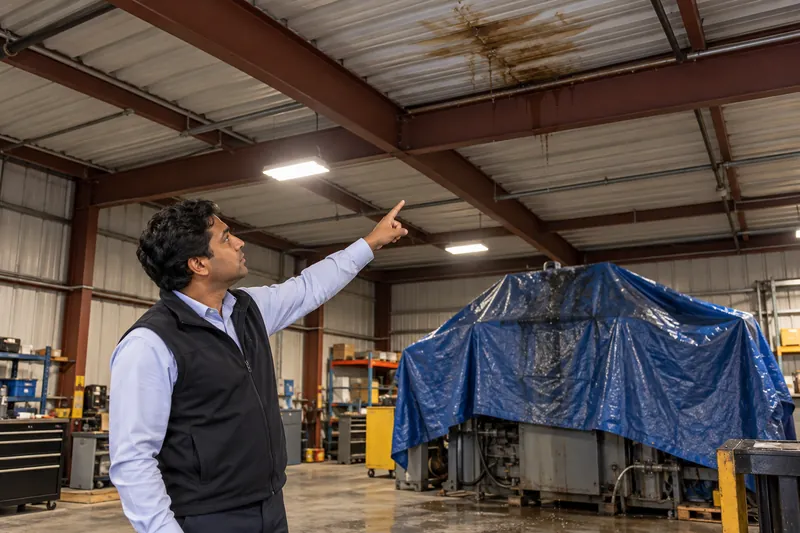
Facility manager pointing to a roof leak above tarp-covered equipment inside a metal building

Question about your own roof?

Call Us
Is silicone a good choice for a low-slope metal roof that holds water?

Usually, yes. Silicone handles standing water better than acrylic, which is why we pick it for low standing seam, flat-pitched R-panel additions, and box gutters. Plan for three trade-offs: dirt dulls the white, later recoats need silicone or a special primer, and wet silicone is slick. Water that sits for days also earns a look at the purlins.

How is a metal roof prepared for coating?

In a set order: inspection, pressure wash, rust removal and primer on bare or rusted steel, fastener work, then sealer and fabric at laps, end laps, curbs, and flashing. Skylights, vents, and rooftop units are masked before base and top coats go on, and each step is photographed so you see the panels before coating covers them.

Who handles gas piping on a Louisville metal roof during coating?

Gas and plumbing permits run through the Kentucky Department of Housing, Buildings and Construction, while Louisville Metro handles the building side.

Gas lines to rooftop units often rest on wood blocks that hold moisture, so the steel under them rusts first. Lifting a pipe to prime beneath it can count as moving gas piping, so every line and support gets marked first.

Can silicone go over an existing silicone or acrylic coating?

Over old silicone, yes, after cleaning and a test patch. Over acrylic, the maker's primer goes down first, and loose or peeling coating comes off. Once silicone is on the roof, future recoats stay with silicone, because acrylic and most other coatings bond poorly to it.

Why does a silicone roof get dirty?

Silicone surfaces hold airborne dirt more than acrylic, so a bright white roof dulls over time, most near exhaust fans and on low spots. Washing with a cleaner the coating maker approves brings back some reflectance, and the same wash prepares the roof for a recoat years later.

Get Silicone On The Roof That Holds Water

Tell us where water sits and how big the section is. We will check drains, laps, and purlins and tell you if silicone fits.

Call (502) 281-7941