Mastic Smeared Over Screws
- You See
- Black tar mounded over fastener rows and laps.
- What It Means
- Mastic hides failed washers and traps water against the steel. It comes off so screws can be tightened, replaced, and capped properly.
We coat metal roofs on older Shively industrial buildings, stripping decades of mastic and patch layers and rebuilding flashing where walls meet the roof, with the plant running below.
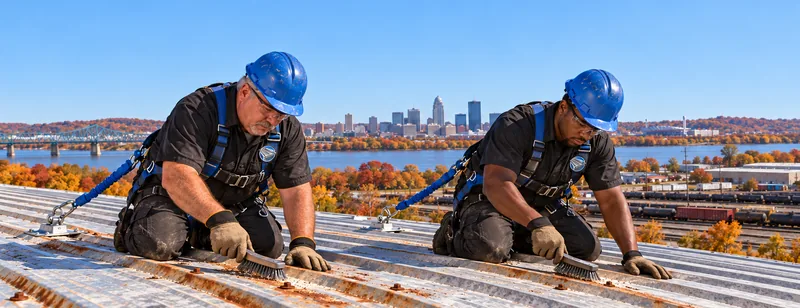
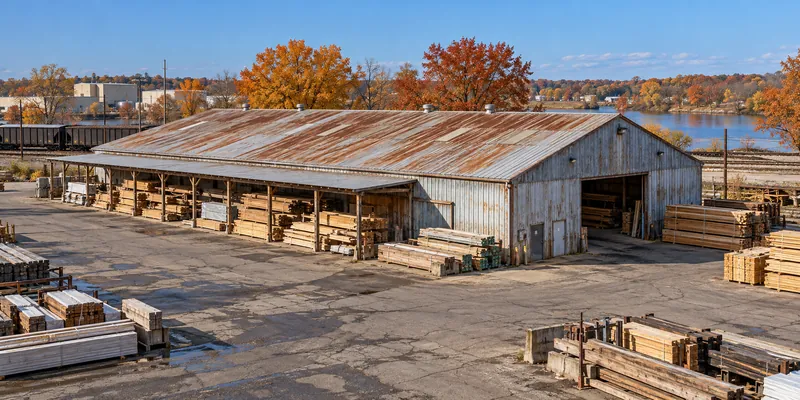
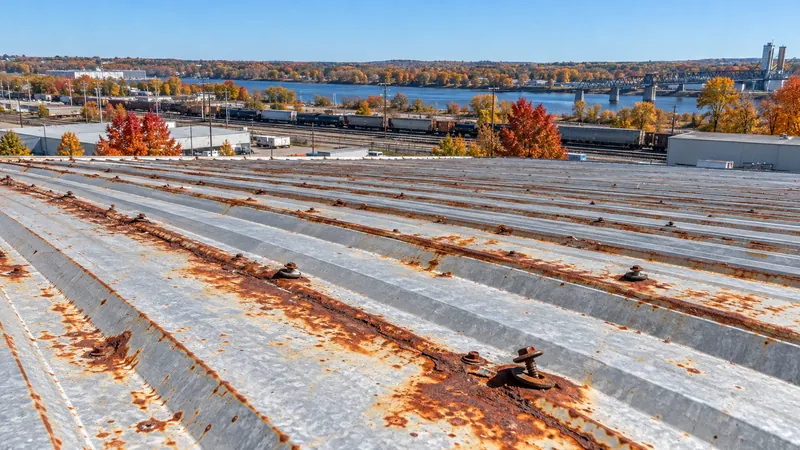
Shively, established in 1938, lists distilleries such as Stitzel-Weller and Michter's among its points of interest, a sign of a long industrial base. Roofs on buildings that old usually carry layer on layer of repairs.
Before any coating, those layers come off: mastic over fasteners, mismatched panels from past additions, rusted base flashing at metal walls, and curbs left from equipment long gone.
On long-serving industrial roofs, the old fixes cause as many leaks as the original panels.
What coating does for a Shively plant or warehouse roof that has been patched for decades.
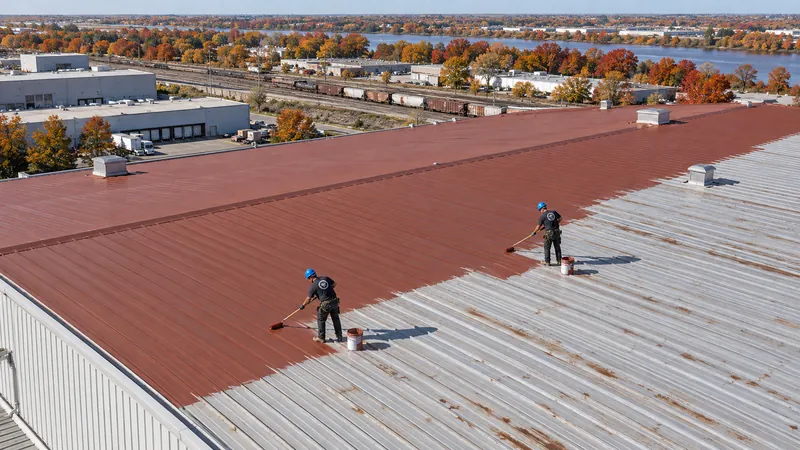
Old mastic and spot repairs give way to one continuous coating over the whole roof, so leaks stop moving from patch to patch.
Work happens on top, section by section, with HVAC intakes covered near the active area and forklift lanes kept clear of lifts and pails.
Coating solid panels avoids tearing off a large industrial roof, which keeps cost and hauling well below a full replacement.
Each repair is photographed before it disappears under coating, giving maintenance staff a clear record instead of guesswork about old patches.
Three ways we coat industrial metal roofs in Shively, chosen once the patch layers are off.
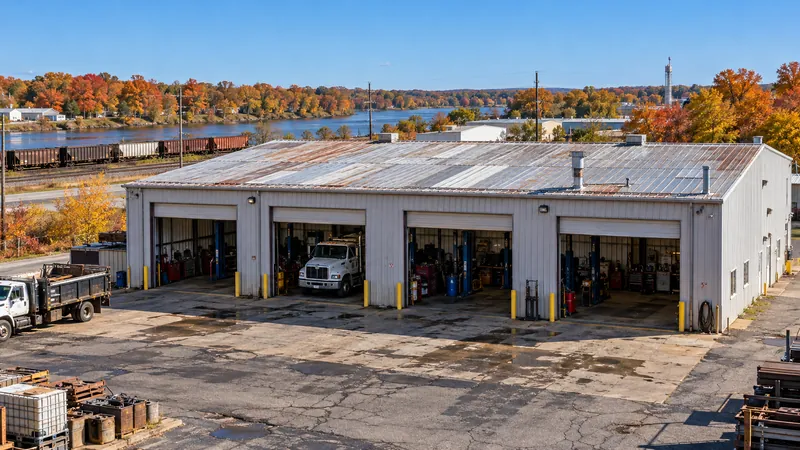
Sloped industrial roofs that drain well get acrylic once old patches are gone and rust is primed.
Best on: Warehouses and shops
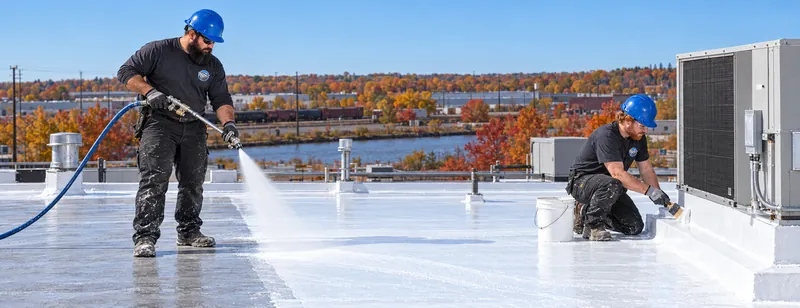
Flat additions and low panels that hold water beside the main roof get silicone.
Best on: Additions and loading dock roofs
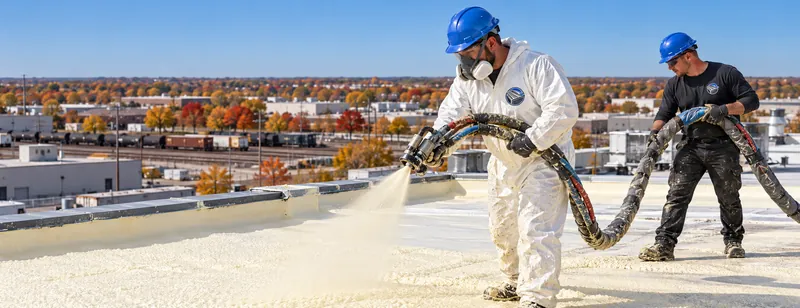
Heated production space under the roof makes foam worth its cost, with a coating sprayed over it.
Best on: Heated plants and shops
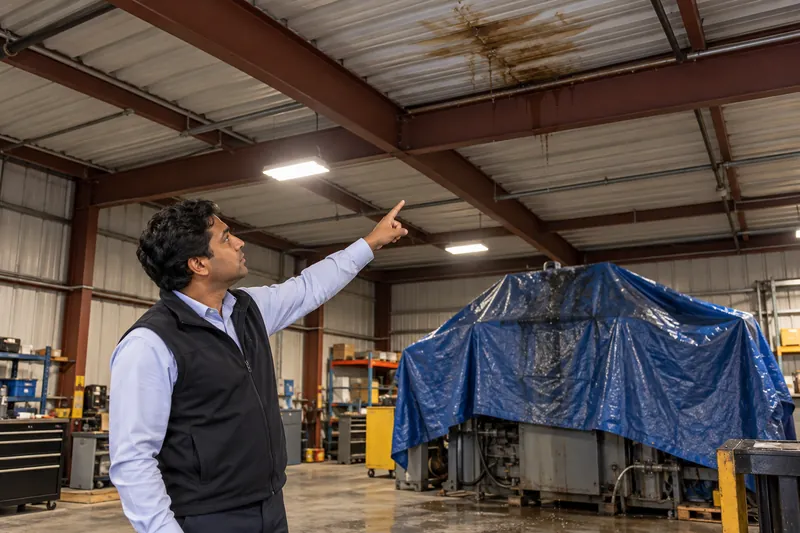
Tell us how many patch layers you know of and where stains show inside. Old repairs set the size of the prep.
Paperwork, patch removal, and plant schedules all shape the order of work here.
We walk every section, probe patches, check base flashing and curbs, and look at purlins and insulation from inside for rust and water.
Shively issues a Compliance Certificate for construction work, which goes to Louisville Metro for the building permit. Commercial roof jobs pay a fee by square footage and post a bond.
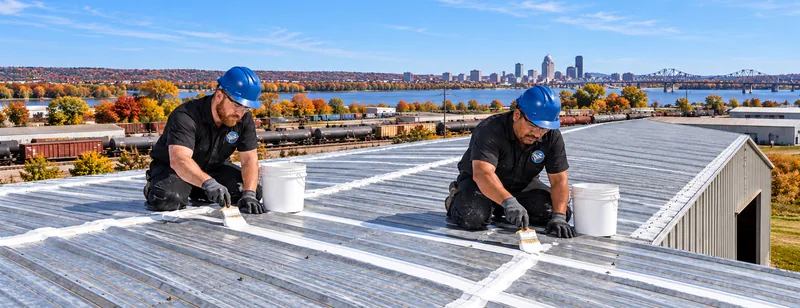
Mastic and loose patches come off, abandoned curbs are removed and patched, and debris goes into a covered container before each crew leaves.
Base flashing and closures are rebuilt, fasteners tightened or upsized, rust primed, and laps sealed with fabric.
Coats go on one section at a time, timed around shifts and deliveries, with intakes near the work covered.
Our metal roof coating work reaches the towns below too. Systems we use most in Shively: Metal Roof Coating and Spray Foam Roofing. Not sure we cover your address? Call us or send us a message.
Not to scale. Your town is ringed in blue.
Down Dixie Highway; gutter and downspout work.
South along Preston Highway; R-panel shops.
East of downtown; a city letter before permits.
Farther east; a 30-day registration.
Hail, plant operations, and city paperwork, answered for Shively building owners.
Question about your own roof?
Call UsHail dents panels, and dents stay cosmetic until the coating cracks or a seam opens; a flexible coating usually stretches with a dent. After a storm, check ridge caps and ribs, coating around screw heads, sealer at end laps, skylights, and gutters. Photograph dents with a coin or tape for scale before any repair, then clean and recoat cracked spots.
Yes, most do, since the work happens on top of the panels. People inside mostly hear footsteps and notice odor near open intakes. We shut down or cover intakes near the active area, mask vehicles and docks against drift, schedule fastener work over offices for quiet hours, and keep forklift lanes and dock doors clear.
It is the city document Shively issues for construction work, and the owner takes it to Louisville Metro to get the building permit. It expires 12 months after work begins. Commercial projects pay a fee based on square footage and post a bond, with exceptions for small projects. Measure true roof surface, since slopes, canopies, and dock roofs add up.
Start with roof-to-wall flashing, how the panels are attached, and how many patch layers sit on top. Decades-old buildings often show mastic over fasteners, mixed panel profiles from additions, rusted base flashing where metal walls meet the roof, and abandoned curbs or vent stacks. Each is fixed before coating, and scraped material goes into a covered container.
Loose patches and mastic over fasteners do, because coating over them traps water and hides failed screws. Patches that are well bonded and compatible can stay after a test patch shows the coating holds. The inspection marks which ones come off.
Tell us about the building and the patches you know of. We will map every layer and plan the coating around your schedule.
Leave a name and number and we will call you about the roof.
Or call now: (502) 281-7941