Foam Plus Coating

Louisville Spray Foam Roofing

We install spray foam roofing in Louisville over metal panels and flat roofs that need insulation, filling panel ribs to a smooth surface and sealing it with a coating.

  • Insulation Added
  • Ribs Filled Smooth
  • Coated Against Sun
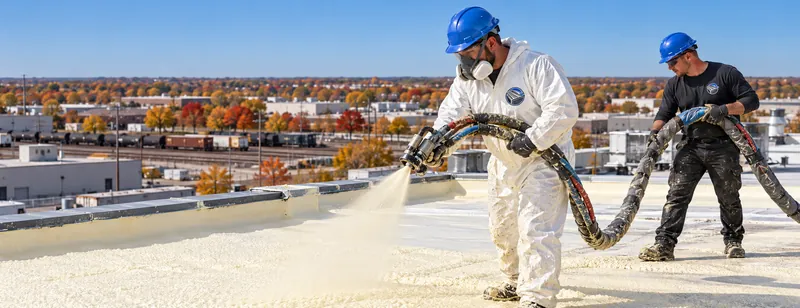
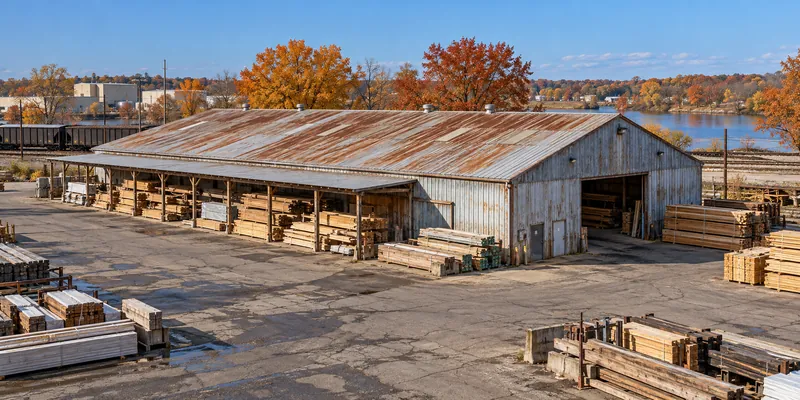
Crew spraying polyurethane foam across a commercial roof deckOpen-sided metal storage building with rust-streaked roof panels at a lumber yard
  • About R-6 Per Inch
  • Fills Deep Panel Ribs
  • Curbs Raised If Needed
  • Overspray Controlled On Site

Foam Or Coating Alone?

Foam earns its cost when the building needs insulation. These conditions sort which roofs get foam and which only need a coating.

  • Usually fits
  • Sometimes
  • Rarely
What We FindFoam Plus CoatingCoating OnlyFix First
Heated or cooled space under bare metalFoam adds insulation set by its thickness.Foam Plus CoatingCoating OnlyFix First
Deep ribs with leaking laps everywhereFoam covers every lap in one layer.Foam Plus CoatingCoating OnlyFix First
Unheated warehouse or barnCoating alone seals it for less.Foam Plus CoatingCoating OnlyFix First
Short rooftop curbs and low edge metalCurbs and flashing get raised before foam.Foam Plus CoatingCoating OnlyFix First
Wet insulation or sagging purlinsStructure and a dry substrate come first.Foam Plus CoatingCoating OnlyFix First

Signs A Building Needs More Than A Coating

Some metal buildings leak and lose heat at the same time. These conditions point toward foam.

Condensation

Drips Under The Deck On Cold Mornings

You See
Water on purlins and fixtures when warm inside air meets cold steel.
What It Means
Bare metal with thin insulation sweats inside. Closed-cell foam on top adds insulation and an air barrier, which keeps the steel closer to room temperature.
Summer Heat

Hot Work Areas Under Metal

You See
Staff and stock sweating under the roof on summer afternoons.
What It Means
Panels with little insulation pass heat straight through. Closed-cell foam adds about R-6 per inch, and a white topcoat reflects the sun.
Age

Leaks At Dozens Of Laps

You See
Stains along several panel runs at once.
What It Means
Sealing every lap one by one adds up on an old roof. Foam covers all of them in one continuous layer before the coating.
Winter

Heat Escaping From A Metal Shop

You See
Heaters running hard while warm air leaves through the roof.
What It Means
Heat rises and leaves through thin roof insulation. Foam adds a continuous layer on top without tearing off the panels.
Equipment

Curbs Too Short For Another Layer

You See
Rooftop unit curbs only a few inches above the panels.
What It Means
Foam raises the roof surface, so short curbs and low edge metal get raised first to keep water out at the flashing.

Commercial Roof Coating Options for Louisville

Foam always gets a coating on top. These are the topcoat setups we use over it.

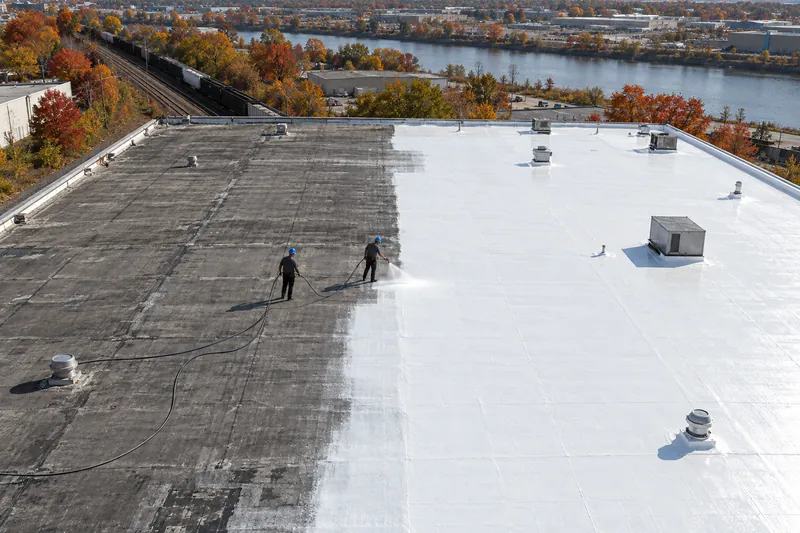
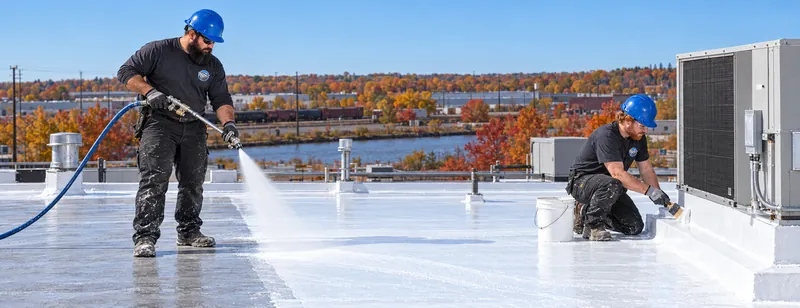
Roofer spraying a white silicone topcoat near a rooftop unit

Silicone Over Foam

Holds up where water sits on flat foam roofs and stays flexible through freeze nights. Later recoats stay with silicone.

Best on: Flat roofs and low spots

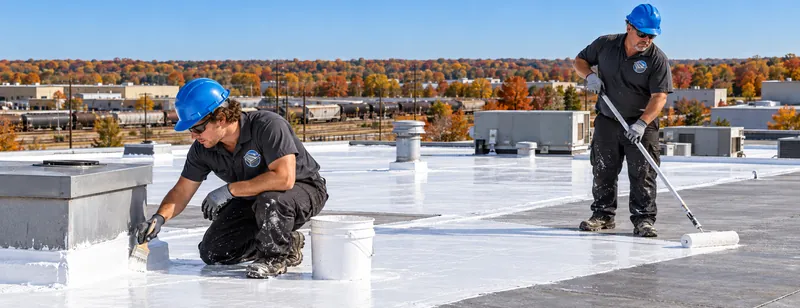
Roofer brushing acrylic coating at a rooftop curb while a second roller coats the field

Acrylic Over Foam

A bright white, water-based topcoat for sloped or well-drained foam. It needs dry, warm weather to cure and recoats easily.

Best on: Sloped foam over metal

Low-slope roof with white silicone coating applied over half the field

Thicker Coating At Edges

Edges, curbs, and drains get extra coating thickness where foot traffic and water concentrate on the foam.

Best on: Roofs with service traffic

Benefits of Coating Your Roof

What foam plus coating adds over a coating alone, for buildings with heated or cooled space under the roof.

Every Lap Covered At Once

Foam fills ribs and bridges laps, screws, and seams in one continuous layer, leaving far fewer joints for water to find than a panel-by-panel seal.

Light On The Structure

Weight stays low: foam is far lighter than a new roof system, though heavier than coating alone. Purlins are still checked before it goes on.

Recoat The Surface Later

When the topcoat wears, the foam is cleaned and recoated instead of replaced, as long as it stays dry and firm.

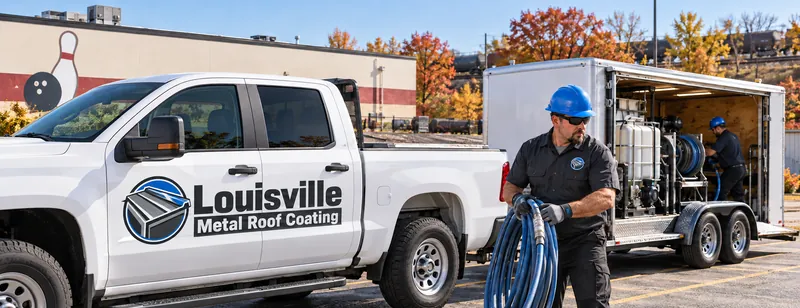
Coating rig trailer and hose reel staged beside a commercial building parking lot

Heat Pouring Through A Metal Roof?

Tell us how the space below is used and whether it is heated or cooled. That decides whether foam or a coating alone makes sense.

How We Install Spray Foam Roofing

Foam work depends on weather and careful masking. These steps keep it on the roof and off everything else.

  1. INSPECT

    Step 1: Inspect Your Roof

    We take moisture readings, check purlins from inside, and measure curb heights, edge metal, and door thresholds the new surface will meet. Wet insulation comes out before foam.

  2. PREP

    Step 2: Prep The Deck

    Panels are washed and dried, loose fasteners fixed, and rusted areas primed. Edge metal and short curbs get raised so the finished foam still sheds water at flashing.

  3. MASK

    Step 3: Mask And Control Overspray

    Rooftop unit intakes are shut down or covered, nearby vehicles masked, and wind is watched through the day, since foam overspray travels.

  4. SPRAY

    Step 4: Spray The Foam

    Closed-cell foam goes on in passes to the thickness set for the insulation target, filling ribs and building slope toward drains where needed.

  5. COAT

    Step 5: Coat The Foam

    Base and top coats follow right after the foam, since bare foam breaks down in sunlight. Thickness is checked across the roof before we leave.

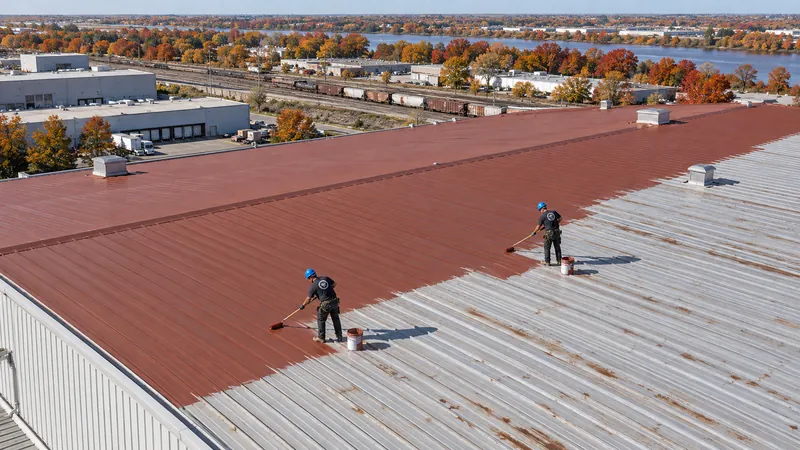
Long warehouse metal roof with red primer on one half and bare galvanized panels on the other
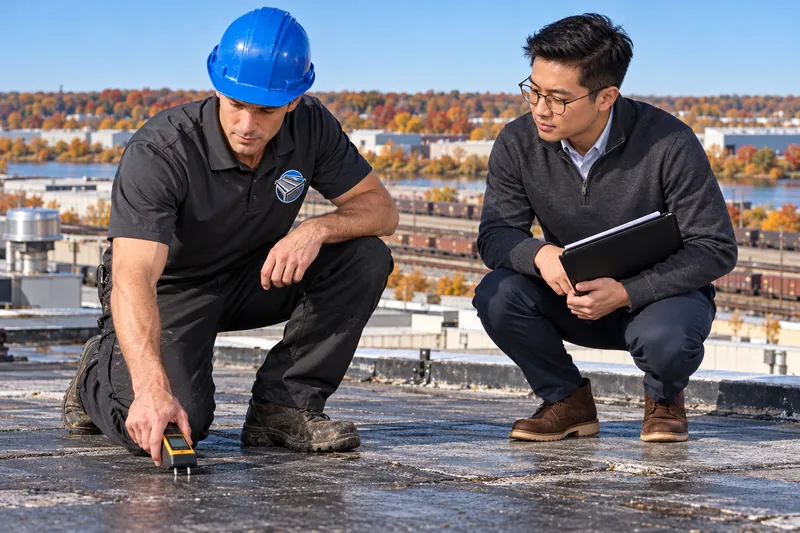
Roofer taking moisture meter readings on a low-slope roof beside the owner

Coatings That Finish A Foam Roof

Every foam roof gets a coating. These pages cover the systems that go over or beside it.

Spray Foam Roofing Questions

Insulation, tax, and utility questions owners ask about foam over metal.

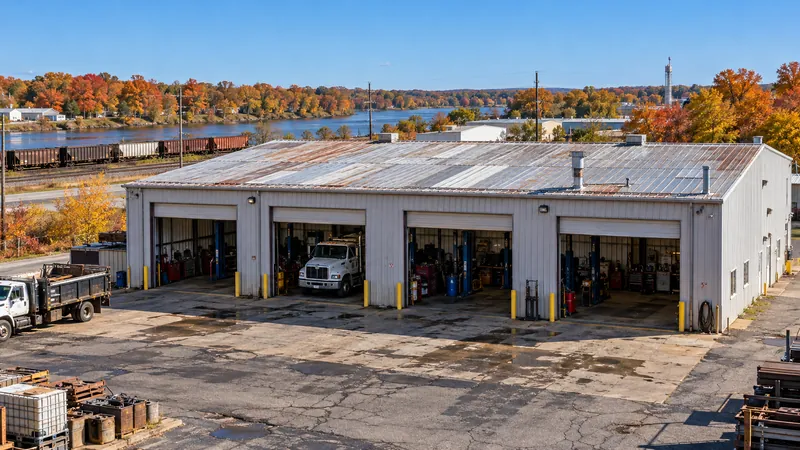
Metal service shop with roll-up bay doors and a weathered panel roof

Question about your own roof?

Call Us
Should spray foam go over a metal roof instead of a coating?

Foam makes sense when the building needs insulation or the panels have deep ribs and many leaking laps, while a coating alone fits a roof that only needs sealing and rust protection. Closed-cell foam adds about R-6 per inch, per the Building America spray foam guide. It fills the ribs smooth, weighs more than coating, and short curbs need raising.

Can a metal roof coating project qualify for a Section 179 deduction?

It can. IRS Publication 946 lets a roof improvement to an existing nonresidential building count as qualified real property under Section 179. For tax years beginning in 2026, the maximum deduction is $2,560,000, reduced once qualifying purchases pass $4,090,000. Improvement versus repair is a tax question, so ask a CPA to review the invoice categories.

Does LG&E or KU help pay for metal roof improvements?

For coatings alone, no. LG&E and KU business rebate pages name insulation as an eligible custom improvement, while roofing and coatings are absent, so a foam job would go through their custom review. Bring the account number, roof area, and planned foam thickness per section, get any decision in writing, and note that gas-only customers are excluded.

How thick does spray foam go on a metal roof?

Thick enough to fill the panel ribs and reach the insulation value the building needs. On exposed-fastener R-panel, the first pass fills the ribs, and later passes add the inches that set the R-value. Edge metal and curbs are raised to match before spraying.

What happens to foam if the coating wears through?

Bare foam breaks down in sunlight and turns powdery on the surface. Caught early, the fix is simple: the area is cleaned, damaged foam is cut out and refilled, and new coating goes on. Walk the roof each spring and after hail to spot thin topcoat.

Add Insulation And Stop The Leaks

Tell us how the building is heated or cooled and how big the roof is. We will measure curbs and moisture and tell you if foam fits.

Call (502) 281-7941