Side Laps Opening Up
- You See
- Gaps and dirt streaks along laps that run up the slope.
- What It Means
- Daily expansion works stitch screws loose until the lap lifts. Laps get re-stitched, sealed, and covered with fabric embedded in the base coat.
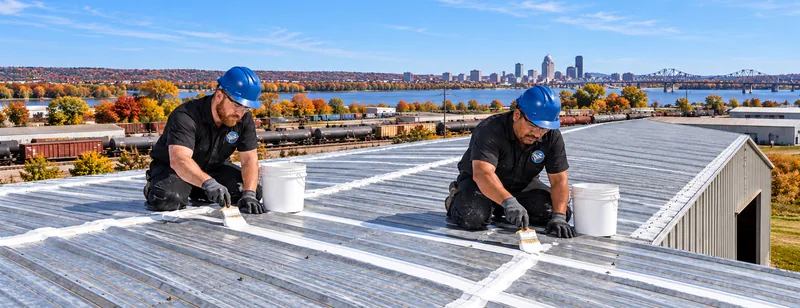
Our commercial metal roof coating work in Louisville covers exposed-fastener, standing seam, and corrugated roofs on warehouses, shops, and retail buildings, after rust, screws, and laps are repaired.
Coating fits steel that still holds a screw. Each row is a condition we find on Louisville metal roofs, and the dots show which job it points to.
| What We Find | Coat Now | Repair, Then Coat | Replace Panels |
|---|---|---|---|
| Faded paint, tight lapsWash, adhesion test, then prime and coat. | Coat Now | Repair, Then Coat | Replace Panels |
| Screws backing out, cracked washersFasteners tightened or upsized, then capped. | Coat Now | Repair, Then Coat | Replace Panels |
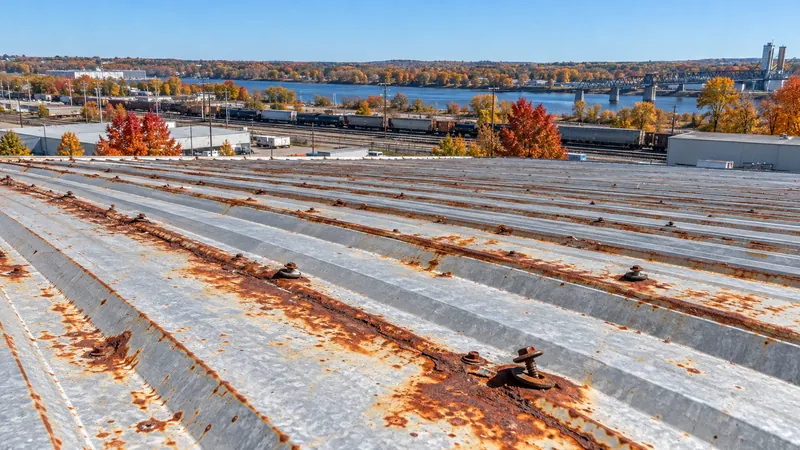
| Orange bloom on panel facesWire brushed and primed with a rust inhibitor. | Coat Now | Repair, Then Coat | Replace Panels |
| Flaking scale and pinholesGround to firm steel, holes patched before coating. | Coat Now | Repair, Then Coat | Replace Panels |
| Panels rusted through or flexing underfootThose panels come out, and coating waits on new steel. | Coat Now | Repair, Then Coat | Replace Panels |
Most roofs show three of these rows in different sections, so the plan is drawn section by section.
Panels rarely fail first. Water gets in at the joints and the hardware, and these are the spots we open up before coating.
Three ways we coat a metal roof, chosen by slope, standing water, and what the building needs underneath.
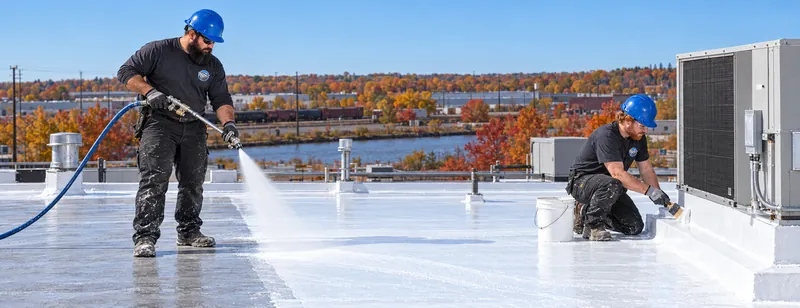
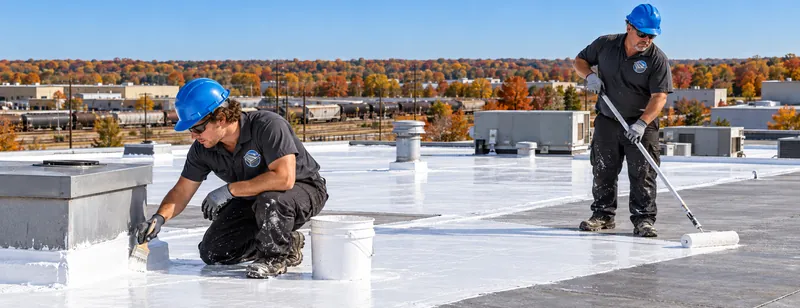
Holds up where water sits after rain on low-pitch panels and in box gutters. It gathers dirt over time, and later recoats need silicone or a special primer.
Best on: Low-slope metal, additions, box gutters
Water-based and bright white, it suits sloped R-panel that drains fast. Acrylic needs warm, dry hours to cure and recoats easily when the topcoat wears.
Best on: Sloped exposed-fastener roofs
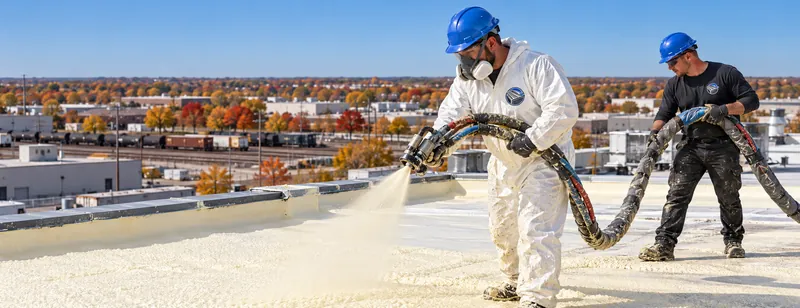
Foam fills the panel ribs to a smooth surface and adds insulation, then a coating protects it from sun. Short curbs get raised before spraying.
Best on: Heated or cooled space under the metal
Four reasons owners coat solid steel instead of re-paneling it.
An elastomeric coating stretches as panels grow and shrink each day, so it stays bonded over laps where a thin paint film would split. Fabric at end laps carries the heaviest movement.
Money that would buy new panels goes into fastener work, rust treatment, and lap repairs on the roof you already have. Rust level and screw count set the final number.
Primed steel sealed under a continuous coating stops taking on rain and dew. Surface rust that was ground back and primed has far less water feeding it.
When the topcoat wears thin, the roof is cleaned and recoated with a compatible product. That keeps old panels and insulation out of the landfill for another cycle.
Photograph the worst panel and the screw heads around it. Those two details tell us most of what the prep will involve.
Metal prep takes most of the time on the roof. Coats go on after every lap and screw has been dealt with.
We grade rust panel by panel, count loose and stripped fasteners, measure laps and ridge cap, and check purlins from inside. A fabric-strip pull test shows whether the factory paint will hold a coating.
Dirt, chalk, and oil come off with a pressure washer and an approved cleaner. Panels dry fully before any primer, and dew on north slopes pushes the start time back.
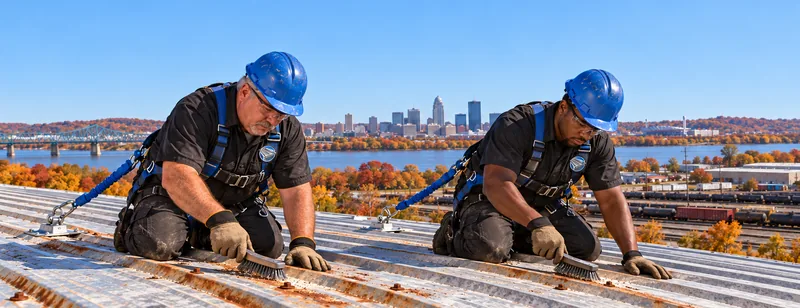
White rust is washed and primed per the coating maker. Light red rust gets wire brushed, and heavy scale is ground to firm metal and patched where pinholes go through.
Every screw row is tightened by feel, stripped holes get oversized screws, and end laps get stitch fasteners where missing. Sealer and polyester fabric cover each joint.
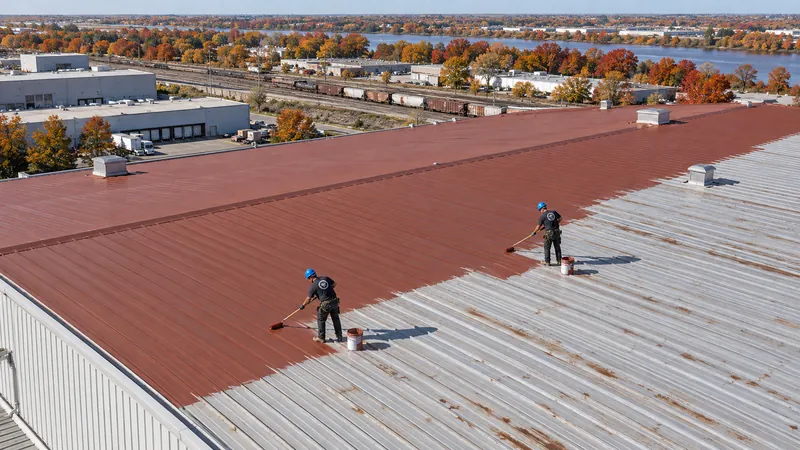
Base coat and topcoat go over the whole roof at the film thickness the data sheet lists for metal, with skylight panels masked so they keep passing daylight.
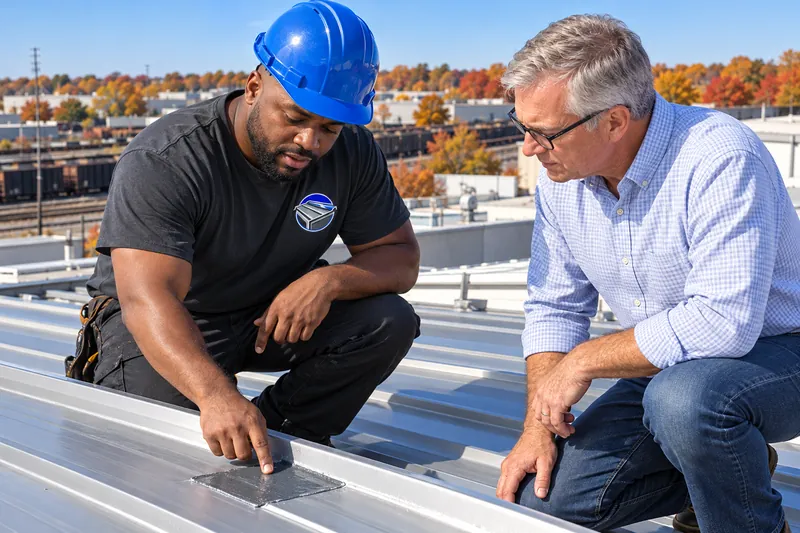
Metal roofs often sit beside other roof types on one building. These are the systems we bring for those sections.
For a flat addition or box gutter that holds water beside the sloped metal.
See Silicone Roof CoatingWhen the building below is heated and the bare metal adds little insulation.
See Spray Foam RoofingShingle mansards on the same storefront get checked against the shingle maker's guidance.
See Shingle Roof CoatingAnswers for owners comparing a coating with paint, patches, or new panels.
Question about your own roof?
Call UsYes. Paint is a thin decorative film that cracks along moving laps, while an elastomeric roof coating goes on many times thicker and stretches as the steel grows in afternoon sun and shrinks overnight. Coating systems also add seam sealer and reinforcing fabric at laps, two details a paint job leaves out.
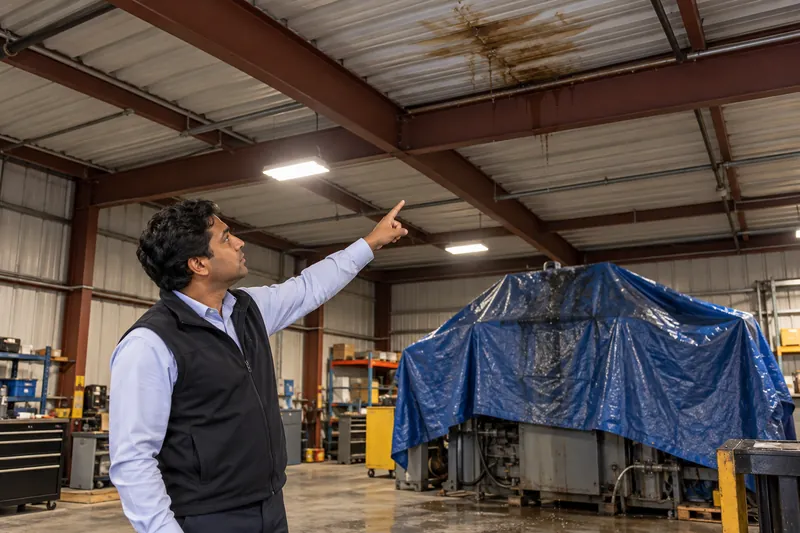
Yes, when the leak comes through a fastener, a panel lap, or a small rust pinhole and that spot is repaired before the field coat. We trace stains on purlins and insulation from inside, mark the matching screw or lifted lap on top, then repair, prime, and seal it. A split gutter seam or rusted-through panel needs hands-on repair first.
Red rust is iron oxide on steel that has lost its zinc or paint, while white rust is powdery zinc corrosion on the galvanized layer. White rust is washed off and primed. Light red rust is wire brushed and primed, heavy scale is ground to firm metal, and pinholed panels are patched or replaced.
If the building sits in a Louisville Metro Preservation District or Overlay Zone and the roof shows from the street, plan on it. Exterior changes there go to Planning and Design Services before the building permit.
Metal behind a parapet rarely shows, while standing seam slopes and awnings facing the sidewalk do, and cool-colored coatings give reviewers an option beyond white.
Yes, the prep differs. Standing seam has no screws through the field, so leaks start at end laps, clips, and curbs. We seal end laps and penetrations, check that clips still let panels move, and coat over the seams. Exposed-fastener R-panel needs every screw and washer handled first.
Send the roof size and where it leaks. We will walk the panels, photograph every problem spot, and tell you whether coating fits.
Leave a name and number and we will call you about the roof.
Or call now: (502) 281-7941