Faded, Chalky Paint
- You See
- Red or green panels gone pale, with powder left on your hand.
- What It Means
- The factory finish is breaking down and absorbing more heat. Chalk is washed off so acrylic can grip the paint underneath.
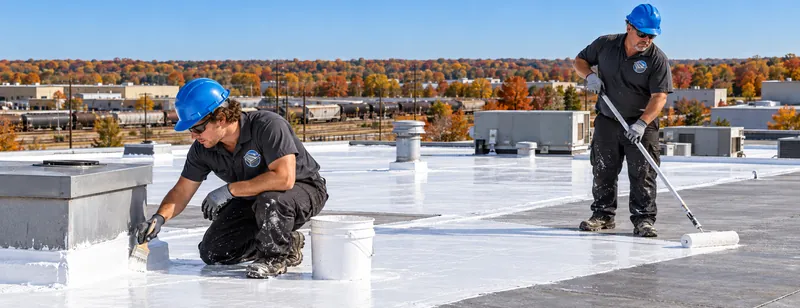
We apply acrylic roof coating in Louisville on sloped R-panel and other roofs that drain fast, timing the coats to warm, dry weather so the water-based finish cures white.
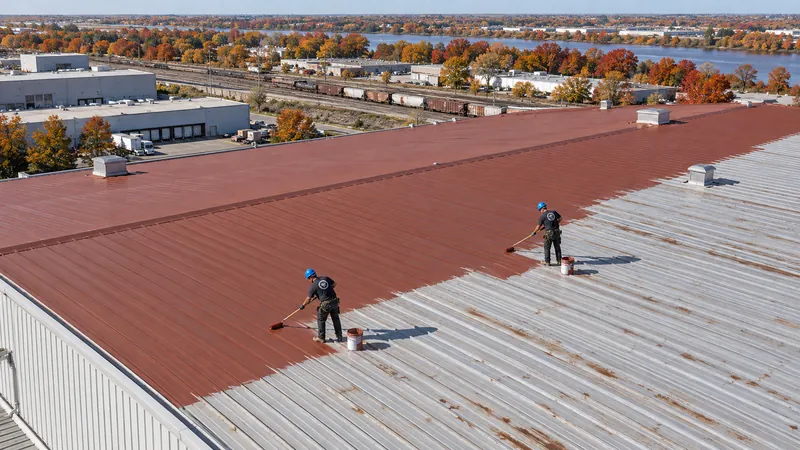
Acrylic is water-based, so slope and weather decide where it works. These are the conditions we sort on Louisville roofs.
| What We Find | Acrylic Fits | Prep First | Choose Silicone |
|---|---|---|---|
| Sloped R-panel that drains within hoursThe most common acrylic roof we coat. | Acrylic Fits | Prep First | Choose Silicone |
| Faded factory paint with light chalkingWashed and test-patched, primed if the patch peels. | Acrylic Fits | Prep First | Choose Silicone |
| Bleed-through from old asphalt patchesA blocking primer goes over the patches first. | Acrylic Fits | Prep First | Choose Silicone |
| Low panels or gutters that hold waterAcrylic softens under ponding, so silicone goes there. | Acrylic Fits | Prep First | Choose Silicone |
| Worn acrylic due for a recoatCleaned and recoated with acrylic. | Acrylic Fits | Prep First | Choose Silicone |
Sloped metal sheds rain well, so the wear shows up in the finish, the patches, and the hardware first.
Three acrylic setups, picked by what the roof is made of and how it drains.
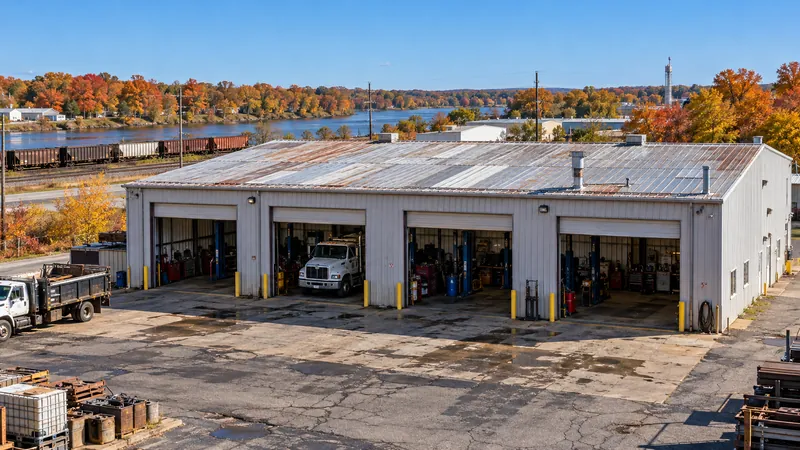
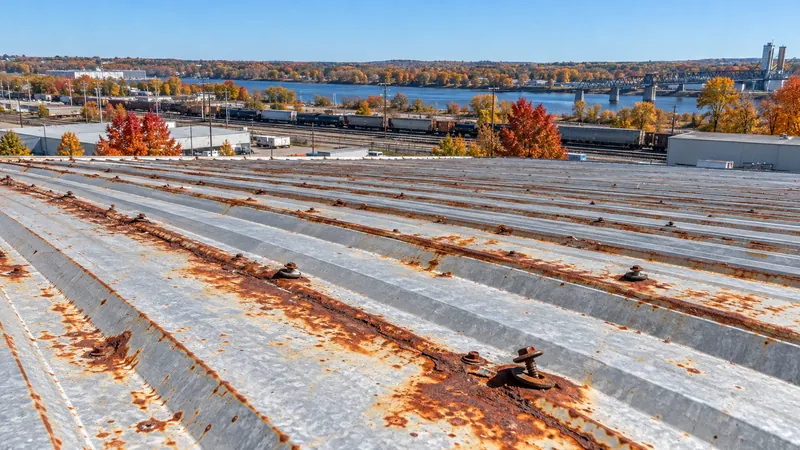
Exposed-fastener shops and warehouses with surface rust. Screws and laps are handled, rust is primed, then two acrylic coats go on.
Best on: Service shops, storage buildings
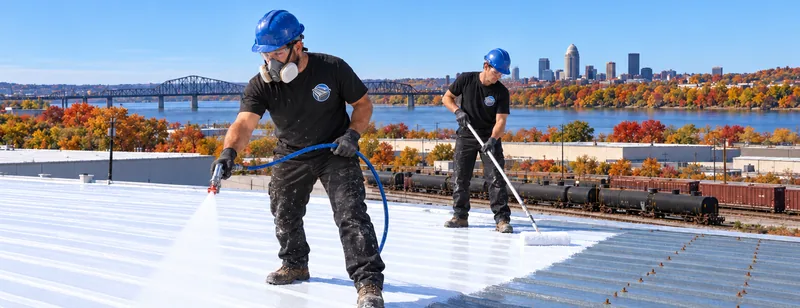
Curbs, vents, and lap lines get acrylic with embedded polyester fabric before the field coats, adding thickness where the roof moves most.
Best on: Roofs with many penetrations
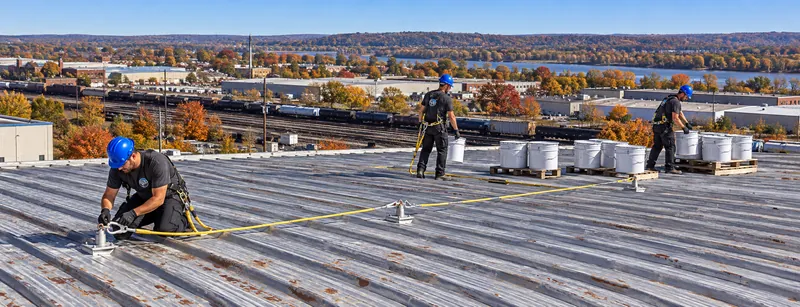
A worn acrylic roof gets washed, spot-repaired, and recoated with acrylic, keeping the same system in place for another cycle.
Best on: Roofs coated years ago
Where acrylic earns its place on sloped metal, from summer heat to the next recoat.
A white acrylic finish reflects sun that faded paint absorbs, cutting heat through the panels. Air-conditioned offices and shops under the metal notice it most.
Old acrylic takes a new coat well, so the next recoat goes over a washed surface instead of a stripped roof. Future upkeep stays simple.
Water-based acrylic carries less solvent odor at rooftop intakes than many other coatings. Intakes near the active section still get shut down or covered.
Coating solid R-panel with acrylic costs far less than re-paneling the roof, and the rust and lap work extends the steel you already paid for.
Tell us the panel color, roughly how many skylights there are, and whether old patches show. That sets the prep before acrylic goes on.
Acrylic cures by drying, so the weather sets the pace. Each step below is timed against the forecast.
We check paint chalking, rust, skylight laps, and old patches, then set a test patch with fabric strips. If the strips peel easily, a primer made for painted metal goes on and the test is repeated.
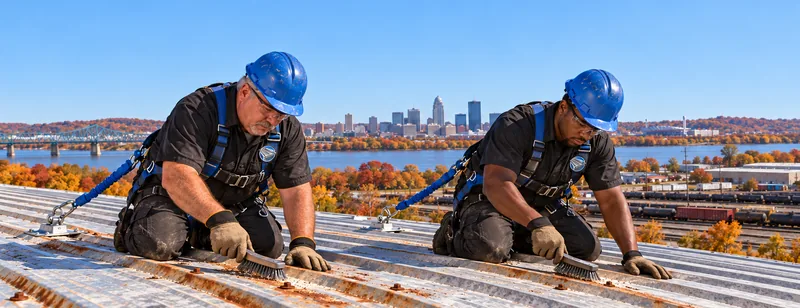
A cleaner the coating maker approves takes off chalk and dirt. Bare steel dries fast, but dew on north slopes and in shade near parapets dries late, so start times move with it.
Rusted areas get a rust-inhibiting primer, and old asphalt patches get a blocking primer so they cannot bleed through the white.
Polyester fabric is embedded in acrylic at curbs, vents, skylight edges, and lap lines, building thickness where panels move most.
Base and top coats go on in warm, dry hours with no rain in the forecast. Cooler fall nights stretch cure times, so late-season jobs need wider windows.
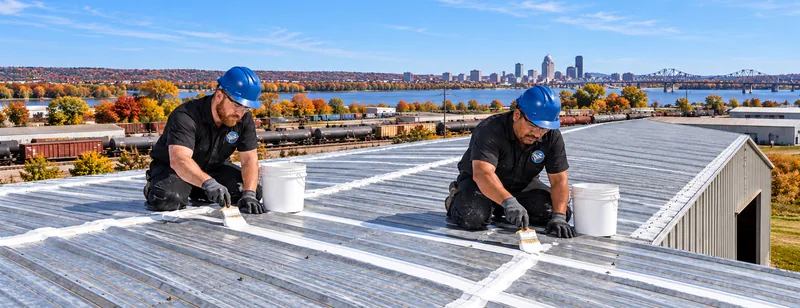
Acrylic covers the sloped panels. These systems take care of the rest of the roof.
Low panels or box gutters that hold water get silicone instead of acrylic.
See Silicone Roof CoatingMetal prep, fastener work, and rust treatment come before either coating.
See Metal Roof CoatingShingle sections on the same building go through their own inspection gate.
See Shingle Roof CoatingWeather, paint, and white-roof questions owners ask about acrylic.
Question about your own roof?
Call UsTwo measures: solar reflectance and thermal emittance, the terms the U.S. Department of Energy uses for cool roofs. Both run from 0 to 1, and higher numbers run cooler. The Cool Roof Rating Council directory lists rated coatings with initial and aged values. Bare galvanized steel reflects sun but sheds heat poorly, so a white acrylic coat changes both numbers.
Rain sets the pace. Louisville averages about 48 inches of precipitation a year, and May is the wettest month at just over 5 inches, per National Weather Service Louisville normals. Acrylic needs dry panels and a dry cure window, and an afternoon storm can wash fresh acrylic off a slope, so acrylic jobs need longer dry stretches than silicone.
On many factory-painted panels, yes, though slick fluoropolymer finishes and heavy chalking can block adhesion. We coat a small test patch with fabric strips, let it cure, and pull the strips. Heavy chalk is washed off with an approved cleaner first. If the patch peels easily, a primer made for painted metal goes down and the test runs again.
That depends on how thick the coats went on, how much sun the roof gets, and whether drains and seams are kept up. The coating maker's data sheet ties film thickness to its expected service. When the topcoat thins and fabric starts to show at details, the roof is washed and recoated.
Yes, once nights stay mild and the forecast shows dry days. Spring in Louisville runs wet, with May the wettest month, so acrylic jobs wait for a stretch long enough to wash, dry, and cure each coat. Prep work like fastener and lap repair can start sooner.
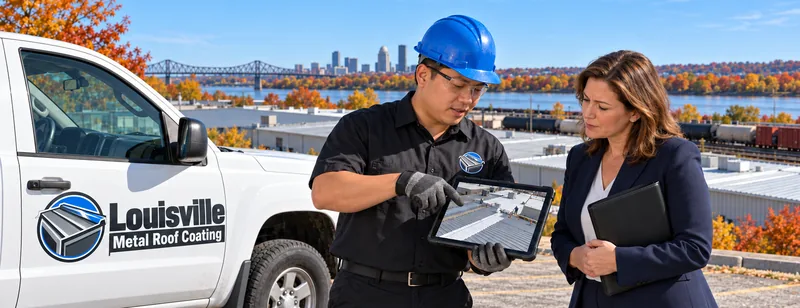
Tell us about the slope, the panel color, and any skylights. We will test the paint, check the rust, and plan the coats around the weather.
Leave a name and number and we will call you about the roof.
Or call now: (502) 281-7941