Owner Questions, Answered

Louisville Metal Roof Coating Questions

Straight answers about rust, fasteners, coating choices, weather, cost, and permits for commercial metal roofs in Louisville and nearby towns.

  • Rust And Fasteners
  • Cost Drivers Explained
  • Permit Steps By Town
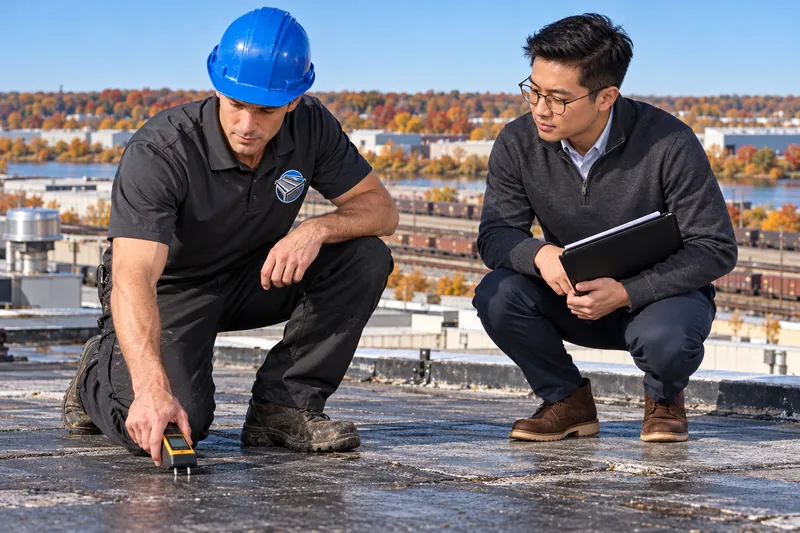
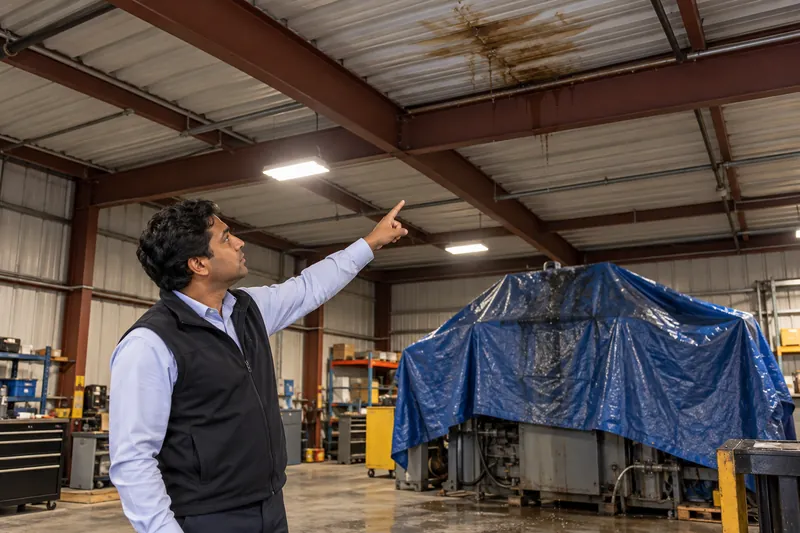
Roofer taking moisture meter readings on a low-slope roof beside the ownerFacility manager pointing to a roof leak above tarp-covered equipment inside a metal building

Louisville Metal Roof Coating FAQ

Metal roof coating is a liquid system applied in coats over steel roof panels, sealing seams and screw heads and protecting bare metal from rust. Louisville Metal Roof Coating coats commercial metal roofs and also installs silicone, acrylic, spray foam, and shingle roof coatings on business buildings in Louisville and nearby towns across Jefferson County, Kentucky.

Metal Roof Coating Basics

What does a metal roof coating actually do?

A metal roof coating forms a continuous rubbery skin over steel panels that seals seams, covers fastener heads, and slows rust. The liquid goes on in one or more coats and cures into a flexible membrane that is bonded to the metal.

On a commercial building, the coating bridges every panel lap, wraps each screw and washer, and covers ridge caps and trim. A white or light-colored finish also reflects sunlight that bare galvanized or faded painted panels soak up.

The panels keep carrying the load. The coating takes over waterproofing at the joints, which is where most metal roofs start leaking.
Which commercial metal roofs are good candidates for coating?

Metal roofs with solid panels, surface rust, and leaks at seams or fasteners are the strongest candidates for coating. Panels with rust holes, sagging purlins, or wet insulation underneath need repair or replacement first.

Good fits around Jefferson County include warehouses, shops, farm buildings used for business, churches, and older retail buildings. Standing seam roofs coat well too, with different prep.

Roof typeWhat leaks firstPrep focus
Exposed-fastener R-panelScrews, washers, side lapsRe-seat or upsize screws, seal laps
Standing seamEnd laps, clips, penetrationsSeal end laps and curbs, check clip movement
Older corrugatedLaps and rusted end lapsRust treatment, reinforced laps

Is coating a metal roof different from painting it?

Roof coating and paint are different products, because an elastomeric coating goes on far thicker and stretches as metal panels expand and contract. Paint is a thin decorative film that cracks at moving joints.

Steel panels grow in afternoon sun and shrink overnight. That daily movement works screws loose and opens panel laps. An elastomeric coating moves with the metal and stays sealed over those joints, while a thin paint film splits along the lap lines.

Coating systems also add reinforcing fabric and seam sealer at laps, two details paint systems lack.

Can a coating stop an active leak on a metal roof?

A coating stops leaks that come through fasteners, panel laps, and small rust pinholes, once those spots are repaired and sealed before the field coat. Leaks from a rusted-through panel, a split gutter seam, or a failed curb need hands-on repair first.

The order matters:

  1. Find each leak from inside, using water stains on purlins and insulation.
  2. Mark matching spots on the roof, such as a backed-out screw or a lifted end lap.
  3. Repair, prime, and seal those details.
  4. Apply the full coating over the field.

Skipping step 3 traps the leak path under fresh coating.

Rust, Fasteners and Seams

What is the difference between red rust and white rust on metal panels?

Red rust is iron oxide on steel that has lost its zinc or paint protection, while white rust is a powdery zinc corrosion that forms on the galvanized layer. Both need treatment before a roof coating goes on.

Rust typeWhat it looks likeUsual treatment
White rustChalky white powder, often at laps where water sitsWash, remove loose powder, prime per the coating maker
Light red rustOrange bloom on panel faces or screw headsWire brush, rust-inhibiting primer
Heavy red rustFlaking scale and pinholesGrind to firm metal, patch or replace the panel

Coating directly over loose scale traps moisture, so the scale comes off first.

Why do screws back out on a metal roof?

Screws back out because steel panels expand and contract every day, slowly loosening fasteners and wearing the rubber washers. Over the years the washers crack, the screw heads rust, and water follows the threads into the building.

Before coating, crews check every fastener row:

  • Tighten screws that spin freely in good holes.
  • Replace stripped ones with oversized screws.
  • Swap cracked or missing washers.
  • Cap each head with seam sealer or a brushed detail coat.

Driving screws too tight crushes the washers, so the work goes by feel and by eye across the roof.

How are panel laps and end laps sealed before coating?

Panel laps and end laps get cleaned, sealed with a compatible seam sealer, and covered with reinforcing polyester fabric embedded in base coat. These joints move the most, so they get the heaviest detail.

Side laps run up the slope and drain well. End laps, where one panel overlaps the next one down the slope, hold water and dirt longer and rust from the inside out.

Crews open any visibly loose end lap, clean it, and add stitch fasteners where they are missing. Then they seal and reinforce it, and the field coat goes over the whole detail.

How are skylight panels and ridge caps handled during coating?

Skylight panels stay uncoated so they keep passing daylight, while the metal around them and the ridge caps get sealed and reinforced. Clear or translucent panels are masked off, and their side laps and fasteners are sealed to the metal panels next to them.

Brittle or yellowed skylight panels can be swapped for new translucent panels or covered with metal before coating.

Ridge caps, closures, and trim pieces get fastener checks, seam sealer at overlaps, and fabric where caps meet panels. Torn foam closures under the ridge cap get replaced so wind-driven rain stays out.

Can gutters and box gutters be coated with the roof?

Gutters and box gutters can be coated with the roof when the metal still holds a fastener and the seams are resealed first. Built-in box gutters on older buildings leak at their seams and at the outlet tubes.

Gutter prep includes:

  • Clearing leaves, grit, and standing debris
  • Wire brushing rust along the bottom
  • Resealing end caps, seams, and downspout outlets
  • Embedding fabric over each seam

Silicone is a common choice inside gutters because water sits there after storms. Hangers and downspouts pulling away from the wall get refastened during the same visit.

Choosing a Coating System

Silicone, acrylic, or urethane: which coating fits a metal roof?

Silicone fits metal roofs with flat spots and ponding, acrylic fits sloped metal roofs that shed water fast, and urethane fits roofs with heavy foot traffic or impact. On rusty steel, a rust-inhibiting primer usually goes down under whichever topcoat is chosen.

CoatingStrengths on metalTrade-offsGood match
SiliconeResists ponding water, stays flexibleHolds dirt; later recoats need siliconeLow-slope metal, box gutters
AcrylicWater-based, bright white, easy to recoatNeeds warm, dry weather to cure; weak under pondingSloped R-panel with good drainage
UrethaneHard, impact and traffic resistantStronger odor, solvent handlingService walkways, hail-prone roofs

The coating maker's data sheet for metal sets the primer and the film thickness.

Is silicone a good choice for a low-slope metal roof that holds water?

For low-slope metal roofs that hold water, silicone is the usual pick because it handles standing water better than acrylic. Low standing seam roofs, flat-pitched R-panel roofs on additions, and box gutters all collect water in spots after rain.

Trade-offs to plan for:

  • Dirt sticks to silicone and dulls the white finish over time.
  • Future recoats call for silicone or a special primer.
  • Wet silicone gets slick, so roof walkways need care.

Any spot where water sits on the panels for days also deserves a look at the purlins underneath, because sagging can signal a structural problem.

Should spray foam go over a metal roof instead of a coating?

Spray foam over metal makes sense when the building needs insulation or the panels have deep ribs and many leaking laps, while a coating alone fits a roof that only needs sealing and rust protection. Closed-cell foam adds about R-6 per inch, according to a U.S. Department of Energy Building America guide.

FactorCoating onlySpray foam plus coating
Insulation addedVery littleYes, set by foam thickness
Panel ribsStay visibleFilled to a smooth surface
WeightVery lightLight, though heavier than coating
Rooftop curbsStay as they areShort curbs need raising
Best fitUnheated warehouses and barnsHeated or cooled space under the metal

Can asphalt shingles on a commercial building be coated?

Asphalt shingles on a commercial building can be coated only when the shingle manufacturer approves it and the shingles are still flat, attached, and holding most of their granules. Shingle coatings seal aging shingles in place rather than repair failed ones.

Strip centers, offices, and churches often have shingle mansards or steep sections next to metal or low-slope roofs. Those shingle areas get checked for:

  • Curled or cupped tabs
  • Heavy granule buildup in gutters
  • Soft decking at eaves and valleys
  • Lifted ridge caps and exposed nails

Shingles with those problems are better replaced, and a coating can conflict with the shingle manufacturer's terms.

What makes a coated metal roof count as a cool roof?

A coated roof counts as cool when its surface has high solar reflectance and high thermal emittance, the two measures the U.S. Department of Energy uses to describe cool roofs. Both are scored from 0 to 1, and higher numbers run cooler.

The Cool Roof Rating Council publishes a directory of rated roof products, including coatings, with initial and aged values. Aged values matter because dirt and weather lower reflectance on any roof over time.

Bare galvanized panels reflect sunlight yet shed absorbed heat poorly, so a white coating changes both numbers. Faded red or green panels show the biggest color change.

Louisville Weather and Metal Roofs

How does Louisville's rain affect the timing of metal roof coating?

Louisville averages about 48 inches of precipitation a year, and May is the wettest month at just over 5 inches, according to National Weather Service Louisville 1991 to 2020 normals. Coatings need dry panels and a dry cure window, so rain sets the pace.

Dew on steel panels dries late on north-facing slopes and in shade near parapets, which pushes start times back. Afternoon storms can wash uncured acrylic off a slope, so acrylic jobs need a longer dry window than silicone.

Late summer and early fall often give the steadiest dry stretches for metal roofs in the area.

Does a white coating help or hurt a metal building in Louisville's climate?

A white coating cuts summer heat gain through metal panels, and the U.S. Department of Energy cool roof guide notes that in mixed climates the winter heating penalty is often smaller than the summer savings. The balance shifts with building use.

Space under the metalEffect of a white coating
Air-conditioned office or shopLess heat through the panels in summer
Unheated warehouse or barnCooler air under the deck on hot days
Heated space with little coolingSome winter solar gain lost, worth weighing

Insulation under the panels changes the picture, so review utility bills and summer comfort complaints before choosing a color.

What does hail do to a coated metal roof?

Hail dents metal panels, and those dents stay cosmetic until the coating cracks or a seam opens. A flexible coating usually stretches with a dent instead of splitting.

After a hailstorm, walk the roof and check:

  • Dents on ridge caps and panel ribs
  • Cracks in the coating around fastener heads
  • Split seam sealer at end laps
  • Broken skylight panels and crushed gutters

Photograph dents with a coin or tape measure for scale before any repair, because insurance adjusters and contractors both work from those photos. Cracked coating gets cleaned and recoated over the damaged spot.

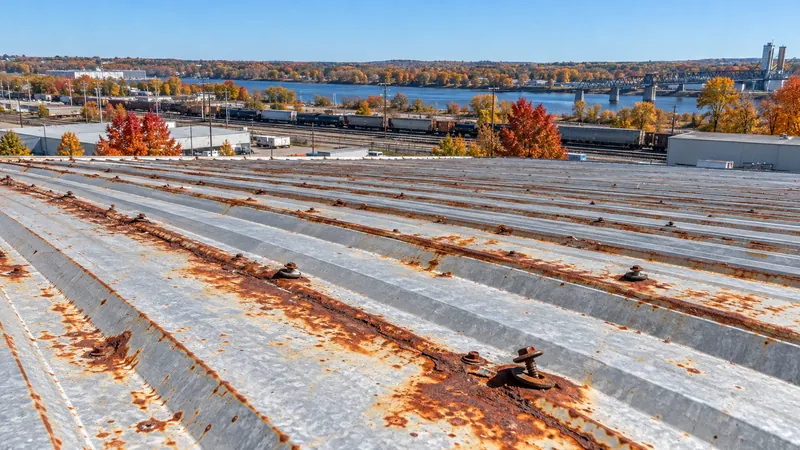
Rust bloom and corroded fastener heads along the ribs of old metal roof panels

Have A Question About Your Own Roof?

Call and describe the roof and what you see inside. We will tell you what to check first and whether a roof walk makes sense.

Prep, Application and Downtime

How is a metal roof prepared for coating?

Prep starts with a full roof inspection and moves through cleaning, rust treatment, fastener work, and seam detailing before any field coat goes down. Coating adhesion on metal rides on that prep.

The usual sequence:

  1. Pressure wash to remove dirt, chalk, and oil.
  2. Remove loose rust and prime bare or rusted steel.
  3. Tighten, replace, or upsize fasteners.
  4. Seal laps, end laps, curbs, and flashing with sealer and fabric.
  5. Mask skylight panels, vents, and rooftop units.
  6. Apply base and top coats at the specified thickness.

Each step gets photographed so the owner can see the panels before they disappear under coating.

Will a coating stick to the factory paint on metal panels?

Coatings bond to many factory-painted panels, though slick fluoropolymer finishes and heavy chalking can block adhesion, so a field adhesion test comes first. Crews coat a small patch with fabric strips, let it cure, then pull the strips to see how well the coating holds.

Chalking shows up as white or colored powder on your hand after wiping a faded panel. Heavy chalk gets washed off with a cleaner the coating maker approves.

When the test patch peels easily, a primer made for painted metal goes on and the test is repeated.

Can a warehouse keep operating while the metal roof is coated?

Most warehouses, shops, and plants keep operating during metal roof coating because the work happens on top of the panels. Inside, people mainly notice footsteps overhead and some odor near open rooftop intakes.

Planning steps that keep the floor running:

  • Shut down or cover HVAC intakes near the active area.
  • Mask vehicles and dock areas against spray drift.
  • Pick quiet hours for fastener work over offices.
  • Keep forklift lanes and dock doors clear of lifts and pails.

Sections are coated one area at a time, so the rest of the roof stays open for service work.

How long after coating can a metal roof take rain?

Silicone coatings handle rain sooner than water-based acrylic, and each product's data sheet lists its own rain-ready time. Crews check the forecast against that time before opening a new section of panels.

Acrylic needs warm, dry hours to cure, so a storm the same evening can wash it off a sloped panel. Morning dew counts as moisture too, and it forms readily on bare steel overnight.

Cooler fall nights stretch cure times. The last coats of the season need a wider dry window than a midsummer job on the same roof.

Cost, Value and Taxes

What drives the cost of coating a commercial metal roof?

Roof size, rust condition, and the number of fasteners and seams to detail drive most of the cost of coating a metal roof. Two roofs of the same size can land far apart once prep is counted.

Main cost factors:

  • Amount of red rust to grind, prime, or patch
  • Count of screws to replace or upsize
  • Linear feet of panel laps, end laps, and ridge cap
  • Skylights, curbs, and gutters to detail
  • Coating type and dry film thickness
  • Eave height, slope, and lift access

An on-roof inspection with photos sets the scope before any pricing happens.

Should a metal roof be coated, restored, re-paneled, or replaced?

Solid steel with surface rust gets coated, while widespread rust-through or deck damage calls for replacement. Restoration sits in between and means coating plus heavier repairs such as reinforced laps and patched panels.

Roof conditionCoatRestoreRe-panelReplace
Light rust, leaking screwsYesNoNoNo
Surface rust plus open lapsNoYesNoNo
Rust holes in some panelsNoYes, with repairsThose panelsNo
Wet insulation, sagging purlinsNoNoNoYes

A rust and moisture survey sorts each roof section into one of those rows, and one building can land in two.

Can a metal roof coating project qualify for a Section 179 deduction?

A roof improvement to an existing nonresidential building can count as qualified real property under Section 179, according to IRS Publication 946. For tax years beginning in 2026, the maximum deduction is $2,560,000, reduced once qualifying purchases pass $4,090,000.

Residential rental property is excluded. The line between a roof improvement and a repair is a tax question, so the scope matters. A coating job with new fasteners, reinforced seams, and replaced panels on a warehouse reads differently from a spot patch at one skylight.

Ask a CPA to review the invoice categories before filing.

Permits, Codes and Utilities

Who issues permits for roof coating work in Louisville and nearby small cities?

Louisville Metro's Department of Inspections, Permits and Licenses issues commercial building permits across Louisville Metro, and some small cities add their own sign-off first. Metro's Construction Review publishes a guide to reroofing projects; ask Metro if your coating scope needs a permit.

TownBuilding permitLocal step first
Louisville, Pleasure Ridge Park, OkolonaLouisville Metro IPLNone (confirm the address)
St. MatthewsLouisville Metro IPLLetter of Compliance and city business license
ShivelyLouisville Metro IPLCompliance Certificate
LyndonConfirm with the City ClerkPlans registered 30 days ahead

Plumbing and gas permits run through the Kentucky Department of Housing, Buildings and Construction, which matters when gas lines on the panels get lifted.

Does LG&E or KU help pay for metal roof improvements?

LG&E and KU business rebate pages name insulation as an eligible custom improvement, and roofing and coatings are absent from the list, so any roof project would go through their custom review. The utility sets its own rules and decides eligibility.

For a metal building, spray foam over the panels adds insulation, while a reflective coating alone mainly changes surface temperature. Bring the account number, roof area, and planned insulation thickness for each roof section when asking.

Get any eligibility decision in writing before planning around it. Gas-only customers are excluded, per the program pages.

Questions by Town

Will a white metal roof coating need review in a Louisville preservation district?

Properties in Louisville Metro Preservation Districts or Overlay Zones need exterior changes reviewed before a building permit is issued, so a visible color change on a metal roof belongs in that review. Metro directs owners to Planning and Design Services for it.

Low-slope metal hidden behind a parapet rarely shows from the street. Sloped standing seam roofs, metal awnings, and porch roofs facing the sidewalk do show.

The DOE cool roof guide notes cool-colored products for roofs neighbors can see, which gives reviewers an option beyond white. Bring photos of each street-facing slope and a color sample.

Who handles gas piping on a Louisville metal roof during coating?

In Louisville, gas and plumbing permits go through the Kentucky Department of Housing, Buildings and Construction, so a gas line moved during roof work needs a state permit. Louisville Metro handles the building side.

On metal roofs, gas lines to rooftop units often rest on wood blocks set right on the panels. Those blocks hold moisture, and the steel beneath them rusts first.

Lifting the pipe to clean, prime, and coat underneath, then resetting it on new supports, can count as moving gas piping. Mark every gas line, condensate line, and pipe support before the crew starts.

What does St. Matthews require before coating a commercial metal roof?

St. Matthews requires a Letter of Compliance from the city before Louisville Metro issues the building permit, and the city lists no charge for that letter. The application names every contractor and subcontractor and includes two copies of a site plan.

For a coating job, that site plan works best when it also shows the lift position at the lowest eave, the pail staging area, and the hose route to the roof.

A marked roof plan with skylights, gutters, rooftop units, and rusted areas helps city staff follow the scope.

Does every trade on a St. Matthews metal roof job need a city business license?

Yes, St. Matthews requires every contractor and subcontractor named on its Letter of Compliance application to hold a current city business license. On a metal roof, that list can grow past the coating crew.

Trades that can end up named:

  • Sheet metal shop replacing rusted gutters or ridge caps
  • HVAC contractor disconnecting a rooftop unit to coat its curb
  • Electrician moving conduit that lies on the panels

Collect each license before submitting, since a missing one holds up the letter and then the Metro permit. Settle the list at the same meeting where the scope is set.

What is the Shively Compliance Certificate for a metal roof project?

Shively issues a Compliance Certificate for construction work, and the owner takes it to Louisville Metro to obtain the building permit. The certificate expires 12 months after work begins.

Commercial projects pay a city fee based on square footage and post a bond, with exceptions for small projects.

For a metal roof, measure true surface area. Sloped panels measure larger than the building footprint, and lean-to additions, canopies, and loading dock roofs add up fast. Keep the certificate in the job file until the final coat is on.

What should owners of older industrial buildings in Shively check before coating?

Older industrial buildings in Shively deserve a close look at roof-to-wall flashing, panel attachment, and old patch layers before any coating. The city, established in 1938, lists distilleries such as Stitzel-Weller and Michter's among its points of interest, a sign of its long industrial base.

Buildings with decades of repairs often show:

  • Layers of mastic over fasteners that must come off
  • Mixed panel profiles from past additions
  • Rusted base flashing where metal walls meet the roof
  • Abandoned curbs and vent stacks

Shively Code Enforcement lists debris among common violations, so scraped patch material goes straight into a covered container.

What does Lyndon require before roof coating work starts?

Lyndon's city code asks owners to give the City Clerk a copy of the plans and register at least 30 days before work begins, after which the city issues a letter of compliance. Confirm with the City Clerk whether Louisville Metro or Lyndon issues the building permit for your address.

For a metal roof coating, the plan set can stay simple. A roof plan marking panel type, skylights, gutters, rooftop units, and heavy rust areas, plus the coating product data sheet, covers the scope.

Rust photos attached to the plan show the clerk why fastener and panel work is included.

How does Lyndon's 30-day notice fit the coating season?

Registering a month ahead keeps a Lyndon coating job inside the dry weeks, because the city's 30-day notice runs before work can start. Late registration lets the best spring or fall weather pass while paperwork clears. Metal coatings need dry panels and mild nights to cure.

A workable calendar:

  1. Inspect the roof and photograph rust, laps, and fasteners.
  2. Register plans with the City Clerk.
  3. Order primer and coating sized to the measured roof.
  4. Start prep the week the letter arrives.

Acrylic jobs gain the most from early registration, since acrylic needs warmer, drier days than silicone.

Which office issues roof permits for a Pleasure Ridge Park commercial building?

Pleasure Ridge Park is a Louisville neighborhood, so commercial roof permits come straight from Louisville Metro's Department of Inspections, Permits and Licenses with no small-city letter in between. Applications go through Metro's online Accela portal.

That shorter path helps when a metal roof leak forces quick work on a shop or strip center.

Have the roof area, eave height, panel type, and number of rooftop units on hand when applying. Metro's small commercial project page and reroofing guide spell out what Construction Review expects.

How should coated gutters drain on a Pleasure Ridge Park property?

Coated gutters and downspouts should keep sending water to their existing outlets unless a change is cleared against local stormwater rules first. The Louisville and Jefferson County Metropolitan Sewer District, known as MSD, manages sewer and stormwater systems in the area.

Coating work often exposes gutter problems such as sagging runs, rusted outlets, and downspouts that dump onto pavement next to the wall.

Fix the slope and outlets during prep, then coat the gutter interior. If a downspout needs to move, talk through where that water lands with the owner and MSD before rerouting it.

What should Okolona owners on Preston Highway check on an exposed-fastener metal roof?

Owners of Okolona commercial buildings with exposed-fastener R-panel roofs, including those along Preston Highway, should check every screw, washer, and side lap before coating, since those details leak first.

Corridor buildings collect rooftop add-ons over the years, and each one adds holes through the panels:

  • Sign supports bolted through the roof
  • Satellite and antenna mounts
  • Conduit straps screwed into ribs
  • Old exhaust fans left on abandoned curbs

Each penetration gets resealed with fabric and sealer, and unused mounts come off so their holes can be patched and coated.

How does a coating crew stage work on a busy Okolona commercial lot?

Staging on an Okolona lot works best on the side of the building away from customer parking and the main entrance, with the lift, pails, and wash equipment coned off. Okolona is a Louisville Metro community, so the building permit runs through Louisville Metro IPL without a separate city letter.

Planning points:

  • Coat the roof over storefronts early or late in the day.
  • Cover parked vehicles near the eave against overspray.
  • Route wash water away from storm inlets.
  • Clear the lot each evening.

Shorter work windows over entrances keep customer traffic moving while the panels above are coated.

Getting Started

What should a facility manager gather before a metal roof inspection?

A leak log, the roof's age, and any past repair records are the most useful items to have ready before a metal roof inspection. They point the inspector toward the panels, laps, and fasteners that have caused trouble.

Helpful items:

  • Dates and locations of leaks seen inside
  • Photos of water stains on purlins or ceiling tiles
  • Original panel type and color, if known
  • Rooftop units and the companies that service them
  • Roof hatch, ladder, and key details

Any insurance claim history after hail helps too.

What happens when a crew inspects your metal roof?

The first visit covers a full walk of the metal roof, a look at the panel underside from inside, and photos of every problem area. That record shows the owner what the inspector saw.

On top, the inspector checks fasteners, washers, laps, end laps, ridge caps, skylights, gutters, and rust levels, then runs an adhesion test patch on painted panels. Inside, rust on purlins, wet insulation, and stains get noted.

Louisville Metal Roof Coating then explains in plain terms whether the roof fits a coating, spot repairs, spray foam, or new panels.

Ready To Talk About Your Roof?

Tell us about the building and the roof sections that leak. We will set up the roof walk and answer the rest on site.

Call (502) 281-7941