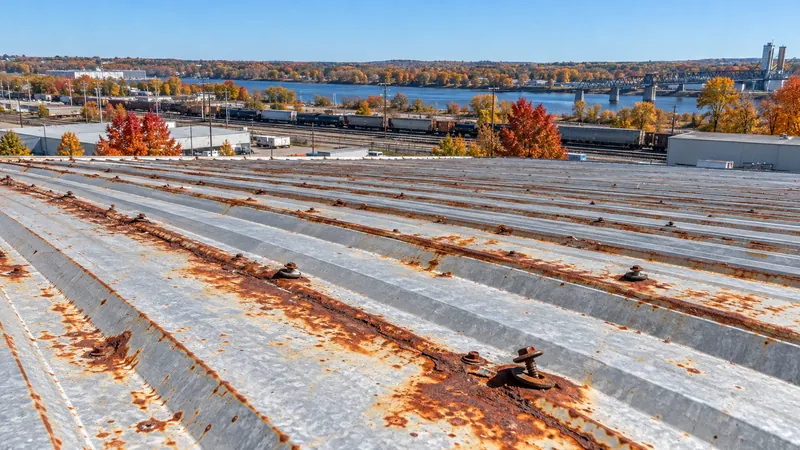
Metal Roof Coating
Rust treatment, fastener work, lap sealing, and a coating system for R-panel, standing seam, and corrugated roofs.
Fits: Steel that still holds a screw
See Metal Roof Coating
Our commercial roof coating services in Louisville cover five systems: metal, silicone, acrylic, spray foam, and shingle coatings, matched to roof type, slope, and the building underneath.
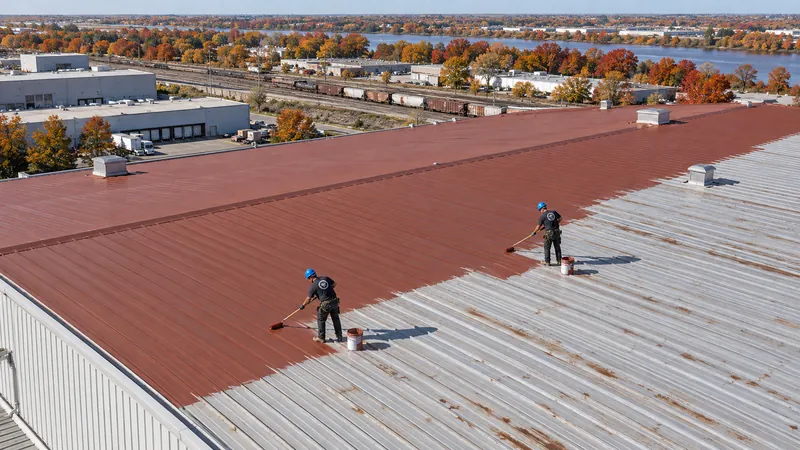
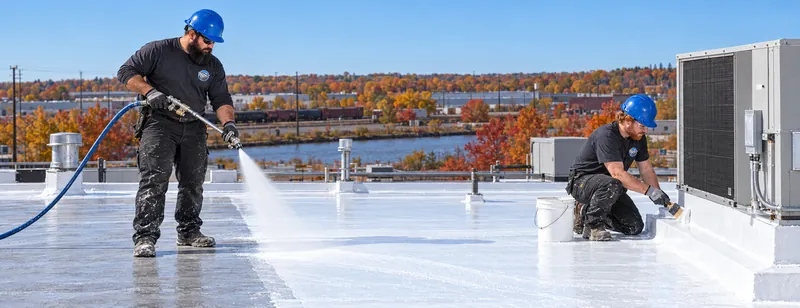
Each system fits a different roof. The fit line under each card tells you where it belongs.
Rust treatment, fastener work, lap sealing, and a coating system for R-panel, standing seam, and corrugated roofs.
Fits: Steel that still holds a screw
See Metal Roof Coating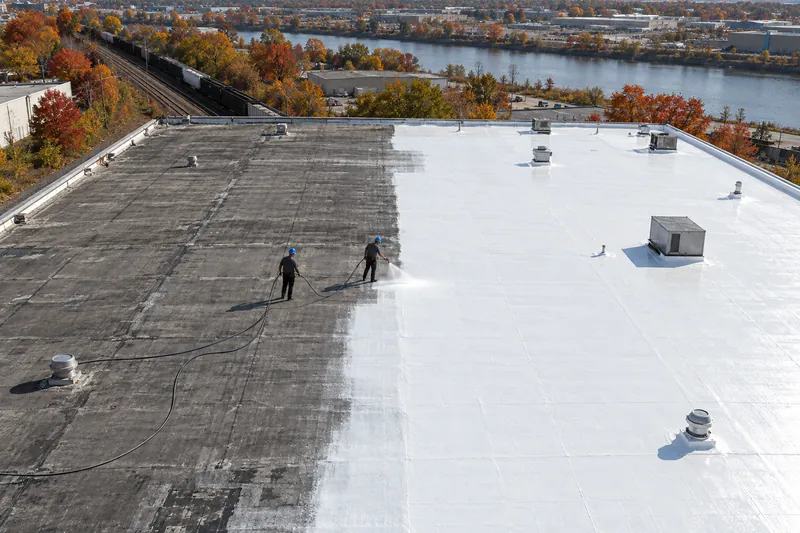
A coating that holds up under standing water on low-slope metal, flat roofs, and box gutters.
Fits: Roofs and gutters where water sits
See Silicone Roof Coating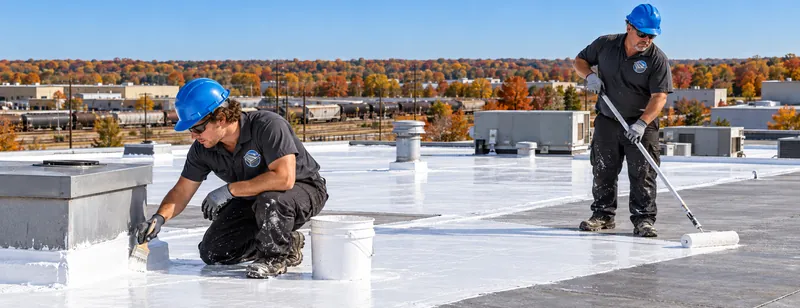
A bright white, water-based coating for sloped roofs that drain fast, applied in dry weather.
Fits: Sloped metal with good drainage
See Acrylic Roof Coating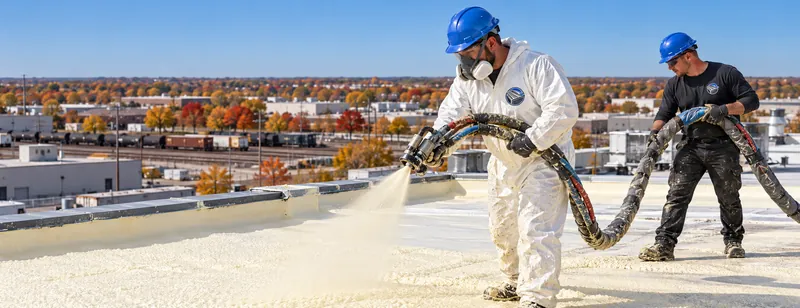
Closed-cell foam that adds insulation and fills panel ribs, finished with a protective coating.
Fits: Heated or cooled space under metal
See Spray Foam Roofing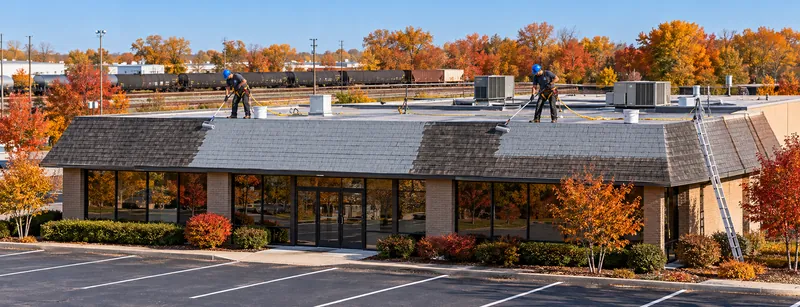
Coating for flat, attached asphalt shingles on commercial mansards and steep sections, where the shingle maker allows it.
Fits: Shingles still in fair shape
See Shingle Roof CoatingRows are conditions you can see from the roof, and columns are our five systems. Dots show where each system usually fits.
| Roof Condition | Metal | Silicone | Acrylic | Spray Foam | Shingle |
|---|---|---|---|---|---|
| Sloped R-panel with surface rustRust primed and laps sealed before any coat. | Metal | Silicone | Acrylic | Spray Foam | Shingle |
| Low-slope panels that hold waterA topcoat that tolerates ponding. | Metal | Silicone | Acrylic | Spray Foam | Shingle |
| Bare metal over heated spaceInsulation needs change the choice. | Metal | Silicone | Acrylic | Spray Foam | Shingle |
| Flat built-up or single-ply roof, dry insulationA moisture survey comes first. | Metal | Silicone | Acrylic | Spray Foam | Shingle |
| Flat, attached asphalt shinglesShingle maker approval first. | Metal | Silicone | Acrylic | Spray Foam | Shingle |
Metal Roof Coating covers the prep and rust work on steel; the topcoat on a metal roof is often silicone or acrylic.
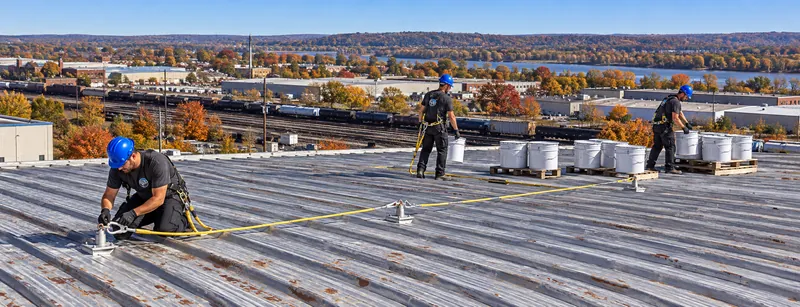
Send the roof type, the slope, and what the space underneath is used for. The roof walk settles the system before anyone prices it.
The coating changes from roof to roof. The order of work stays the same on all five systems.
We walk the roof, check underneath from inside, take moisture readings on flat sections, and test adhesion on painted or coated surfaces before naming a system.
Slope, standing water, insulation needs, and the existing surface decide between metal, silicone, acrylic, foam, or shingle coating, and sometimes two systems on one building.
Washing, rust treatment, fastener work, and sealer with fabric at laps, curbs, and flashing come before any field coat, whatever the system.
Each product goes on at the thickness its maker lists, with rooftop intakes, skylights, and parked vehicles protected from drift.
Thickness gets checked, missed spots are touched up, and you receive photos of the roof before and during the work.
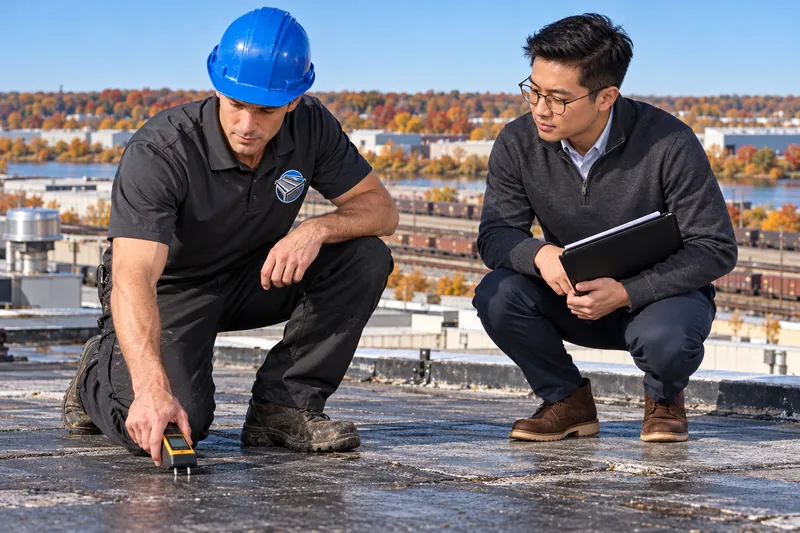
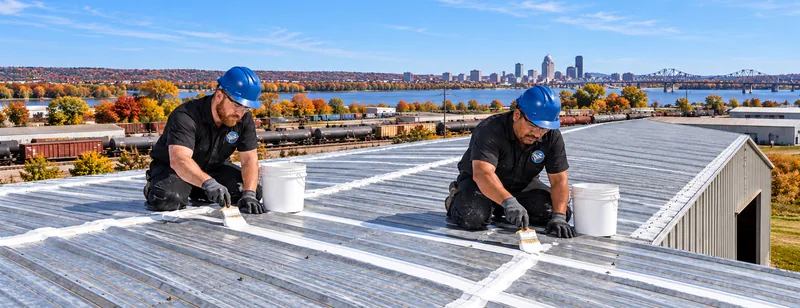
Questions about which system goes where, answered for commercial roofs around Louisville.
Question about your own roof?
Call UsRoofs with solid panels, surface rust, and leaks at seams or fasteners are the strongest candidates. Rust holes, sagging purlins, or wet insulation need repair or replacement first.
Around Jefferson County that covers warehouses, shops, farm buildings used for business, churches, and older retail. Standing seam coats well too, with prep focused on end laps, clips, and penetrations.
Silicone fits metal roofs with flat spots and ponding, acrylic fits sloped roofs that shed water fast, and urethane fits roofs with heavy foot traffic or impact. Silicone holds dirt and needs silicone for recoats, acrylic needs warm, dry weather, and urethane carries more odor. On rusty steel, a rust-inhibiting primer goes under any of them.
Solid steel with surface rust gets coated, and widespread rust-through or deck damage calls for replacement. Restoration sits between: coating plus heavier repairs like reinforced laps and patched panels. Re-paneling swaps only the holed panels. A rust and moisture survey sorts each section, and one building often lands in two categories.
Yes, and it happens often. A strip center might have sloped metal in front that takes acrylic and a flat rear roof that holds water and gets silicone. Each section gets its own prep and product, and the transition between them is flashed and sealed so water stays out where the two roofs meet.
Yes. Silicone and spray foam go on flat built-up and single-ply roofs once a moisture survey shows dry insulation, and shingle coatings go on qualifying commercial shingle sections. Metal is still the roof we coat most, so most jobs include some steel prep even when the building has mixed roof types.
Tell us about the roof and the building under it. We recommend a system after we have walked it.
Leave a name and number and we will call you about the roof.
Or call now: (502) 281-7941