Brittle, Faded Shingles
- You See
- Gray, dry-looking tabs on the south and west faces.
- What It Means
- Sun dries the asphalt and makes tabs brittle. If they still lie flat and hold granules, a shingle coating can seal them in place.

We coat aging asphalt shingle sections on Louisville strip centers, offices, and churches when the shingles lie flat, hold their granules, and the shingle maker allows it.
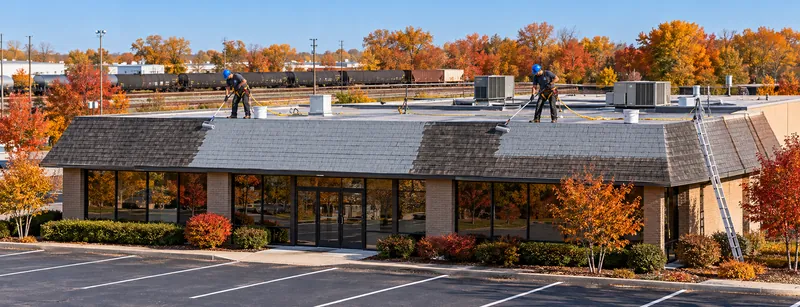

Shingle coating has a narrow gate. Each row is a condition we check on commercial shingle sections, and most failures point to replacement.
| What We Find | Coat | Repair First | Replace |
|---|---|---|---|
| Flat, attached shingles with most granulesThe case a shingle coating is made for. | Coat | Repair First | Replace |
| A few lifted ridge caps or exposed nailsReset and sealed, then the field is checked again. | Coat | Repair First | Replace |
| Curled or cupped tabs across the slopeA coating would lock in a failed surface. | Coat | Repair First | Replace |
| Heavy granules washing into guttersThe shingle is near the end of its life. | Coat | Repair First | Replace |
| Soft decking at eaves or valleysDecking gets replaced first. | Coat | Repair First | Replace |
The shingle maker's terms come first, since a coating can conflict with them.
Shingle mansards and steep fronts on commercial buildings age differently from the metal or flat roof behind them.
Three ways we handle shingle sections, chosen by what the inspection finds.
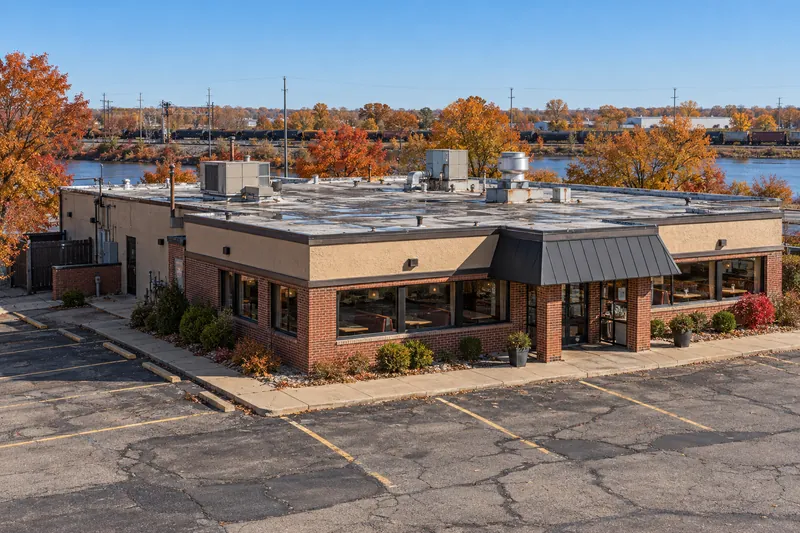
A coating made for asphalt shingles goes over flat, attached shingles after cleaning and repairs, sealing aging shingles in place.
Best on: Mansards and steep fronts in fair shape
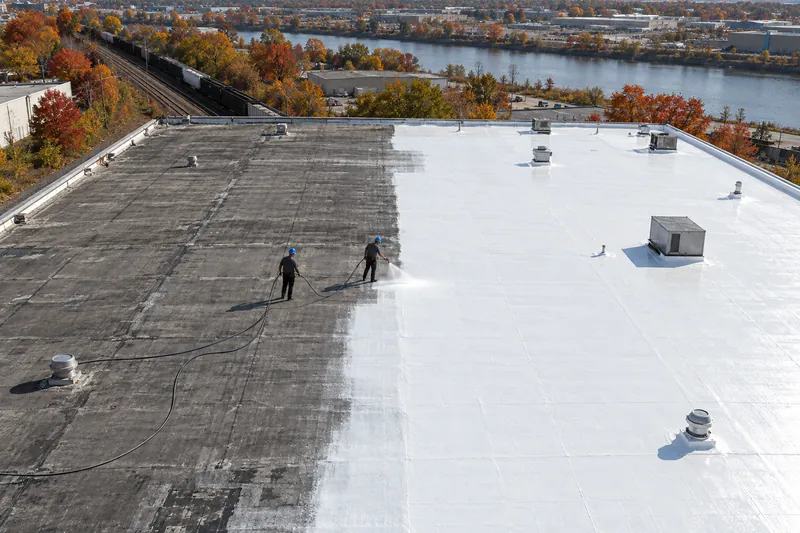
Ridge caps and loose tabs are reset on the shingle section, and the low-slope or metal roof behind it is coated, where most leaks start.
Best on: Strip centers with mixed roofs
Curled tabs, heavy granule loss, or soft decking mean replacement. We say so and coat only the sections that qualify.
Best on: Shingles past their service life
What a shingle coating can do on the right shingles, and only on them.
A shingle coating covers asphalt that sun and heat have been drying out, holding flat tabs and granules in place for longer.
Coating a mansard avoids tearing shingles off above storefront entrances, so tenants and customers keep using the doors below during the work.
Shingles that stay on the roof stay out of the landfill, and tear-off debris on a strip center adds up fast.
The shingle section and the metal or flat roof behind it get planned together, so flashing at the transition is rebuilt once.
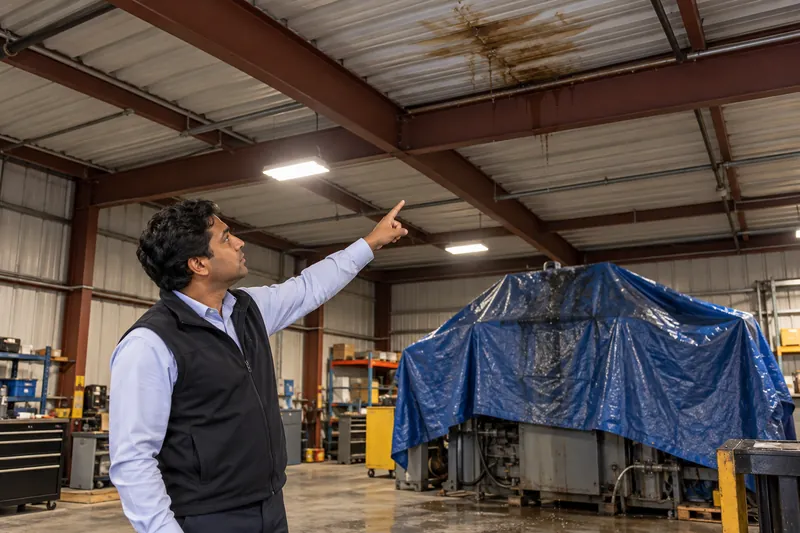
Tell us where the stain shows up inside and which roof section sits above it. Transitions between shingle and flat roofs leak first.
Shingle work starts with a narrow inspection gate, and coating happens only when the shingles pass it.
We check tabs for curling and cupping, granule loss in gutters, ridge caps and nails, and decking at eaves and valleys, then read the shingle maker's guidance on coatings.
Lifted tabs are sealed down, ridge caps reset, exposed nails covered, and damaged shingles replaced so the coating goes over a complete surface.
Flashing where the shingles meet metal panels or a low-slope roof is rebuilt and sealed, since these transitions leak first on mixed roofs.
Shingles are cleaned at low pressure so granules stay on. Moss, dirt, and debris come off, and the slope dries fully.
A coating made for asphalt shingles goes on at the maker's coverage rate, with gutters, windows, and walkways below protected.

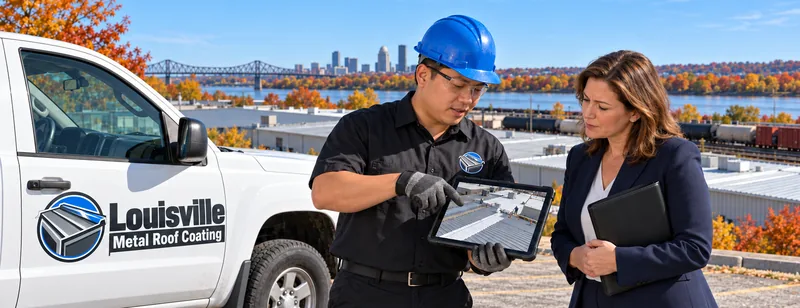
Most shingle fronts hide a bigger roof. These systems cover that main roof.
Metal roofs behind a shingle front get fasteners, rust, and laps handled.
See Metal Roof CoatingFlat roofs behind a mansard that hold water get silicone.
See Silicone Roof CoatingFast-draining sections behind the mansard get a white acrylic coat.
See Acrylic Roof CoatingWhat owners of commercial shingle sections ask before coating.
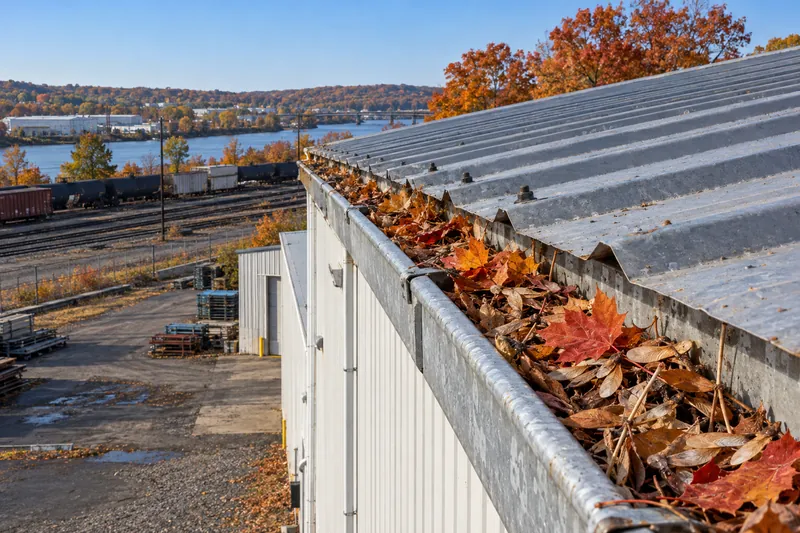
Question about your own roof?
Call UsOnly when the shingle manufacturer approves it and the shingles still lie flat, stay attached, and hold most of their granules. Shingle coatings seal aging shingles in place and cannot repair failed ones. Curled or cupped tabs, heavy granules in gutters, soft decking, or lifted ridge caps point to replacement, and a coating can conflict with the shingle maker's terms.
Strip centers, offices, and churches often use shingles on mansards, entry gables, and steep front sections for looks, with a metal or low-slope roof behind them. Those sections age on their own schedule, so we check them separately from the main roof and plan the two together.
Leaks on shingle sections come from lifted tabs, exposed nails, worn flashing, or damaged decking, and each is repaired directly. A coating goes on after those repairs, over shingles that qualify, to slow further aging. The repair is what stops the leak.
Shingle coatings come in a limited range of colors, and the finished slope looks more uniform than worn shingles. On a building in a Louisville Metro Preservation District, a visible color change on a street-facing slope belongs in the exterior review before the permit.
We identify the shingle brand from records, wrappers, or markings where possible, then read that maker's published guidance on coatings. When the brand stays unknown or the maker advises against coatings, we recommend repair or replacement for that section.
Tell us where the shingle sections are and what the roof behind them is made of. We will check both and give you a straight answer.
Leave a name and number and we will call you about the roof.
Or call now: (502) 281-7941